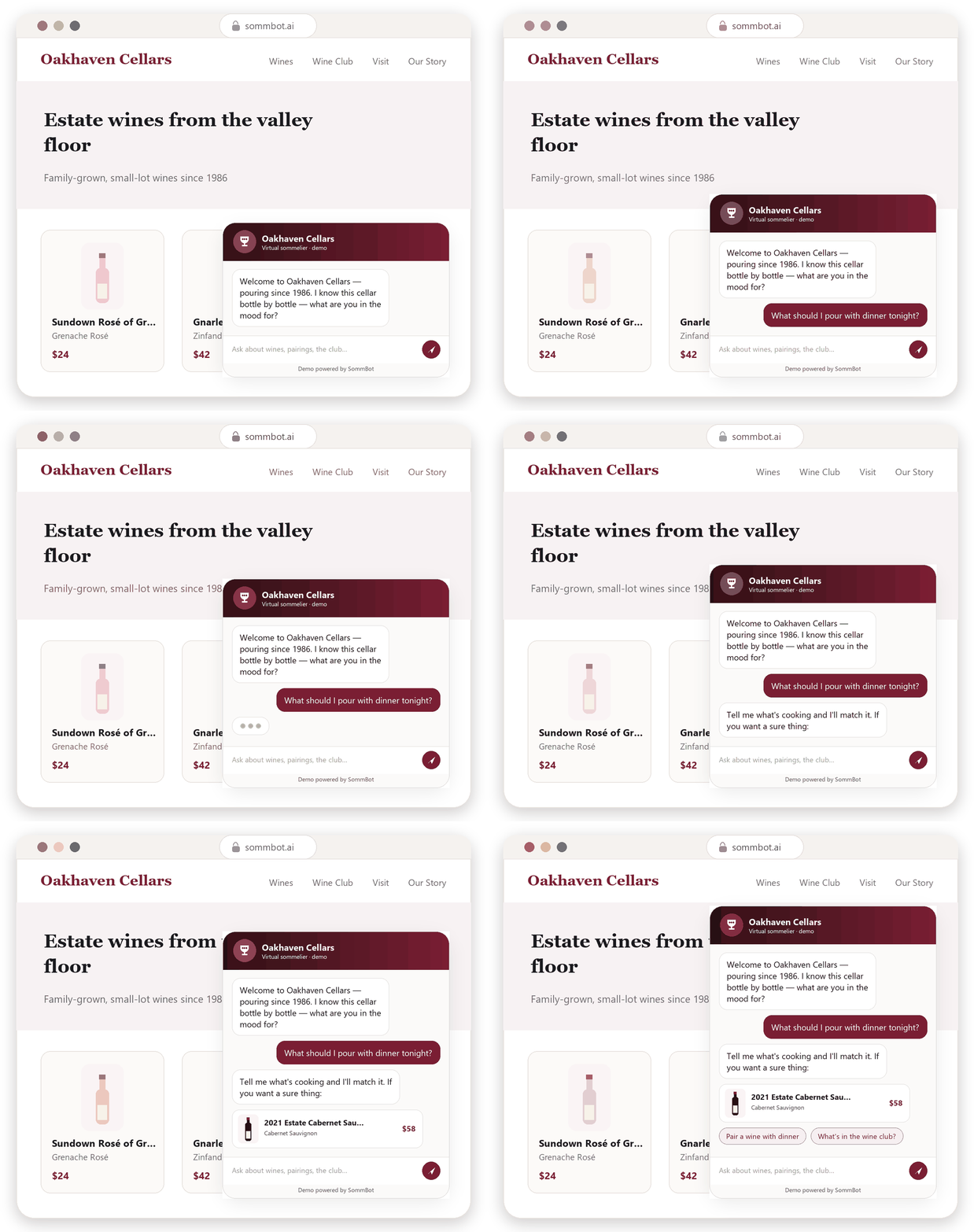
A shopper opens your winery site at 9:40 on a Tuesday night. They're holding a half-full glass, thinking about Saturday's dinner, and they have one simple question: which of your reds goes with braised short ribs? The tasting room closed hours ago. The wine list just sits there — a grid of labels, vintages, and prices — and says nothing back. So they close the tab and ask a search engine instead.
An AI sommelier is built for exactly that moment. It's a conversational assistant that lives on your existing website, knows your actual catalog, and answers the way a knowledgeable staff member would: "The 2021 Syrah is your best match — it has the pepper and structure to stand up to the braise. Want me to add a bottle, or show you the reserve too?" No forms, no dead ends, no waiting until morning.
The phrase sounds like marketing, so let's be precise about what an AI sommelier actually does, how it differs from the generic chat bubble you've seen a hundred times, and why it tends to turn browsers into buyers.
What an AI Sommelier Actually Is
An AI sommelier is a conversational layer trained on your brand's real, approved information — your wines, vintages, tasting notes, pricing, inventory, club tiers, shipping rules, and house voice. Instead of forcing visitors to hunt through menus, it lets them ask in plain language and get an answer that reflects what you'd actually say behind the bar.
Think of it as three things working together:
- Product knowledge — it understands your catalog, not wine in the abstract, so it recommends bottles you actually sell and can ship to that customer.
- Conversation — it interprets messy, human questions ("something bold but not too expensive for my dad who likes Cabernet") and responds in your tone.
- Action — it points to the right product page, adds to cart, surfaces the club, or hands off to a person when the question calls for one.
A good one is deliberately narrow. It isn't trying to be a search engine or a trivia bot. It's trying to do what your best tasting-room host does: read the guest, make a confident recommendation, and make buying easy.
How It Differs From a Generic Chatbot
Most wineries have been burned by a chatbot before — the scripted widget that answers "What are your hours?" and falls apart on anything else. An AI sommelier is a different animal, and the differences are the whole point.
It knows your catalog, not just your FAQ
A rules-based bot matches keywords to canned replies. An AI sommelier reasons over your live product data, so it can compare two vintages, suggest a pairing, or recommend a gift in a price range — questions no FAQ script anticipates. When your catalog changes, its answers change with it, which is why keeping your product catalog and chatbot in sync matters so much.
It sells in context, instead of deflecting
Generic bots are built to reduce support tickets. An AI sommelier is built to move someone from curiosity to cart. It treats every question as a chance to guide, which is really AI guided selling applied to wine — meeting shoppers where they are and narrowing the choice for them.
It stays inside the guardrails you set
A generic bot will happily improvise and, in a regulated category, that's a liability. A well-built AI sommelier answers only from approved content, declines to guess, and won't invent health claims or shipping promises it can't keep. That restraint is a feature, not a limitation.
How Conversational AI Turns Browsers Into Buyers
Selling wine online is mostly a problem of friction and confidence. People want the bottle to be right — for the meal, the gift, the occasion — and a static wine list can't reassure them. Conversation closes that gap. A few specific mechanics do the heavy lifting:
- It rescues the undecided. Many shoppers stall at the wine list because too many options and too little guidance is paralyzing. If you've ever wondered why winery websites lose buyers at the wine list, this is usually the culprit. A quick "tell me what you're eating" turns a 40-bottle wall into one clear recommendation.
- It answers "what pairs with this?" instantly. Pairing is the single most common wine question and the one static pages handle worst. Handling it well, at any hour and at volume, is exactly what wine pairing AI is for.
- It works after close. A large share of DTC browsing happens at night and on weekends, precisely when no one is staffing chat or the phone. An assistant that behaves like an after-hours sommelier captures intent that would otherwise evaporate by morning.
- It nudges toward the club and the bigger basket. When someone loves a recommendation, the natural next line is "members get this at a better price — want to see the club?" That's a soft, well-timed upsell rather than a banner nobody reads.
None of this replaces your team. It backs them up — handling the repetitive, late-night, and high-volume questions so your people spend their energy on the guests and relationships that genuinely need a human.
What a Trustworthy AI Sommelier Will (and Won't) Do
In a regulated, reputation-sensitive category, how the assistant behaves matters as much as what it sells. The bar to hold it to:
- It answers from approved content only. Tools like SommBot are designed to speak from your real catalog and vetted copy — not the open internet — so it won't fabricate a tasting note or a vintage that doesn't exist.
- It respects compliance. Shipping eligibility, age-gating, and health claims are legal minefields. A responsible assistant defers to your rules and avoids anything it shouldn't say, an area worth understanding through compliance-safe AI for beverage DTC.
- It hands off gracefully. When a question is outside its lane — a damaged order, a wholesale inquiry, a truly unusual request — it routes to a human instead of bluffing.
- It knows when to say "I'm not sure." A confident wrong answer erodes trust faster than a modest "let me connect you with the team." Good design prizes accuracy over the appearance of omniscience.
Getting One Onto Your Site
The good news is that an AI sommelier installs on the site you already have — WordPress, WooCommerce, Commerce7, Shopify, Squarespace, or custom — rather than requiring a rebuild. The quality of its answers depends less on the technology and more on what you feed it. Before you launch, get these in order:
- Clean product data. Accurate vintages, prices, inventory, and tasting notes. The assistant is only as good as the catalog behind it.
- Rich descriptions. Detailed, sensory product copy gives the AI something real to reason with — the same words that sell to humans also feed your AI.
- Clear rules. Where you can ship, who qualifies for the club, and what the assistant should never claim.
- A human handoff path. A defined route for the questions that deserve a person.
The Takeaway
An AI sommelier isn't a gimmick bolted onto your homepage. It's the missing conversation on a wine site — the difference between a silent list of bottles and a knowledgeable guide who's available whenever a customer is ready to buy. Done well, it lowers friction, answers the questions that actually stall a sale, and does it in your voice, within your rules.
If you're curious what that looks like on your own catalog, the fastest way to judge it is to watch it answer real questions about your wines. See a live SommBot demo and decide for yourself whether it earns a place on your site.