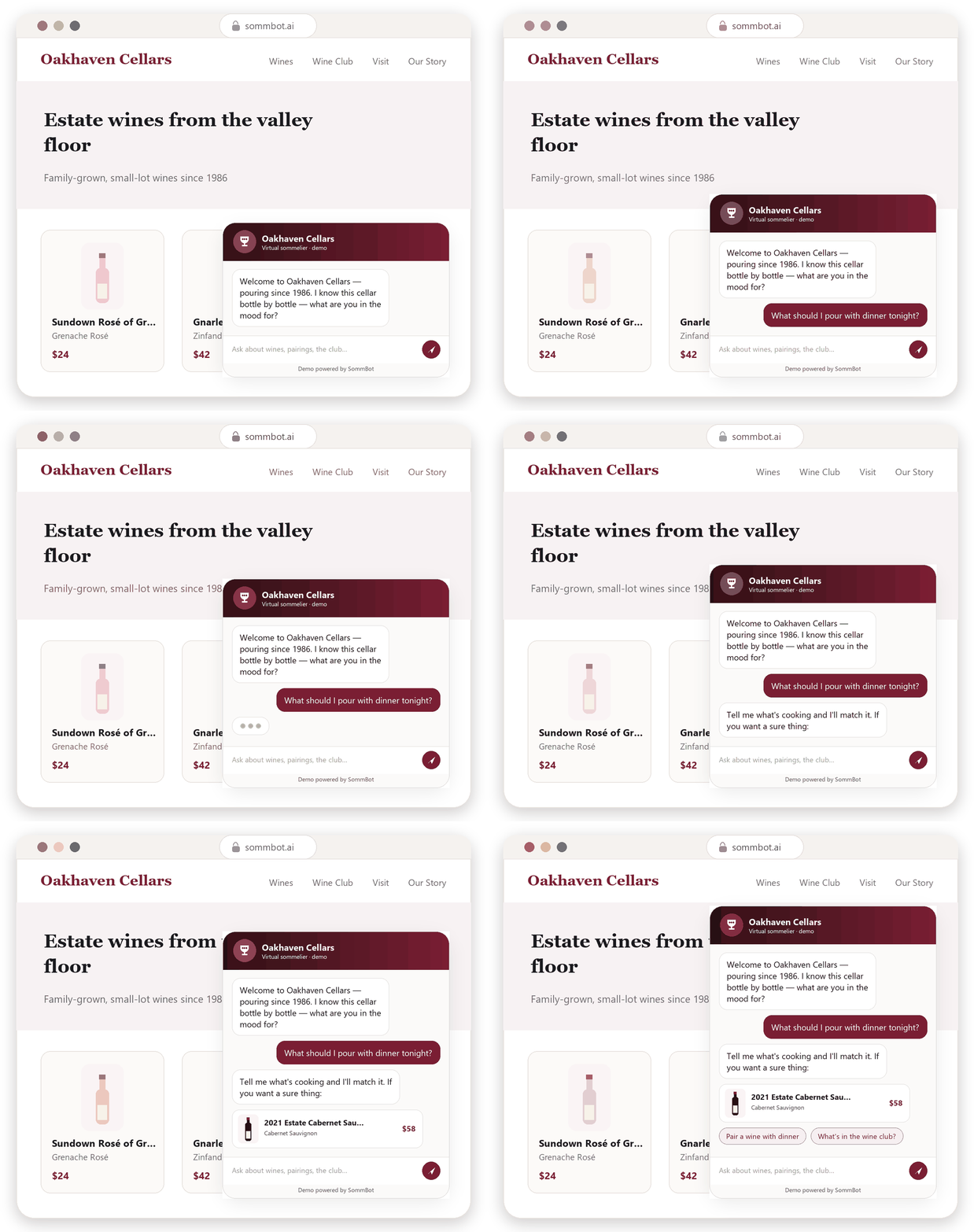
Most CPG ecommerce sites are built like vending machines: a grid of products, a couple of filters, an "Add to Cart" button, and a quiet hope that the shopper already knows what they want. For a regular restocking a familiar case, that works fine. For everyone else — the gift-buyer, the curious first-timer, the person who just clicked through from an Instagram ad — it leaves them alone with a decision they are not equipped to make.
That gap between landing and buying is exactly where an ai chatbot ecommerce conversion strategy earns its place. A well-built conversational assistant does what a strong salesperson does on a busy floor: it reads intent, narrows the field, answers the one question standing between the shopper and checkout, and closes the loop before attention drifts away.
The lift is not magic, and it is not the same as bolting a generic "How can I help?" bubble onto your homepage. It comes from a handful of specific mechanisms. Here is how each one actually moves the number.
Why CPG shoppers stall between the product page and checkout
Before you can lift conversion, it helps to name what suppresses it. For consumer packaged goods — wine, spirits, specialty food, supplements, coffee — most abandoned sessions share a small set of causes:
- Choice overload. Forty SKUs on one page is exciting for the brand and paralyzing for a newcomer who cannot tell the reserve bottling from the estate one.
- Missing context. The product page lists tasting notes but not whether it pairs with the dinner they are cooking, or whether it makes a good gift for a father-in-law who "likes bold reds."
- Unanswered logistics. Will it ship to their state? When will it arrive? Is it cold-packed in July? Doubt about the boring details quietly kills the sale.
- Low confidence. A shopper who is not sure they are choosing the right thing often chooses nothing at all.
Each of these is a conversation the shopper wants to have and cannot. A static page can only guess which questions to answer up front. If you have watched buyers hesitate on your wine list or product grid and then leave, you have seen these stall points in the wild.
Guided selling turns "just browsing" into a basket
The single biggest mechanism behind conversational conversion is guided selling: helping a shopper find the right product through a short, natural exchange instead of a filter menu. Ask a person "What are you in the mood for tonight?" and you get a usable answer. Ask them to click through Varietal, then Region, then Price, then Body, and most give up two clicks in.
A good assistant translates loose, human input — "something light for a warm evening, under $30" — into a specific, in-stock recommendation from the real catalog. That is fundamentally different from search. It meets the shopper where their intent actually lives, which is in plain language, not in your taxonomy. We dig into why the old model breaks in how AI guided selling fixes product discovery.
Why guided selling converts
- It reduces the choice set from dozens to two or three, which lowers decision anxiety.
- It attaches a reason to the recommendation ("this one because it is lighter and food-friendly"), building the confidence a bare product grid cannot.
- It can naturally suggest a complementary item or a larger format, lifting average order value without feeling like a hard upsell.
Objection handling at the exact moment of doubt
Conversion is often lost in the last thirty seconds, when a specific worry surfaces and there is no one to resolve it. This is where real-time objection handling matters, and it is a core part of any ai chatbot ecommerce conversion effort.
The objections are predictable, which is what makes them answerable:
- Shipping and compliance: "Can you even ship wine to my state?" An assistant that knows your fulfillment rules answers instantly instead of sending the shopper to a policy page they will never read.
- Fit: "Is this too sweet?" or "Is this gluten-free?" — answered only from approved product data, never guessed.
- Value: "Why is this one more expensive?" A short, honest explanation of the difference often justifies the price better than the price tag alone.
The discipline here matters as much as the capability. A trustworthy assistant answers from approved content only and hands off to a human when it does not know — it does not invent a health claim or promise a delivery date it cannot keep. That restraint is what keeps objection handling from backfiring, and it becomes even more important once you factor in recovering abandoned carts for beverage and CPG brands.
Friction removal: what "adding a chatbot" should actually mean
It is worth being precise about the phrase. Dropping a slow, scripted bot that loops shoppers through a decision tree adds friction; it does not remove it. The goal is the opposite: fewer steps, answered in place.
Concretely, a conversational layer removes friction when it:
- Answers a question inside the buying flow, so the shopper never leaves the page to hunt for a policy or FAQ.
- Carries context — remembering that the shopper said "gift" so the follow-up suggests gift packaging, not a case discount.
- Works on a phone screen, where thumb-typing a question beats pinch-zooming through a filter menu.
- Moves the shopper toward checkout with the right item already identified, rather than dumping them back into the grid.
This is also where a purpose-built tool like SommBot fits: installed on the brand's existing store and trained on the real catalog, it acts as an always-available concierge that backs up staff rather than replacing them — answering after hours, during a flash sale, or whenever the tasting room is closed.
How to measure the ecommerce conversion lift honestly
Skepticism is healthy here, so measure like a skeptic. The claim is not that a chatbot doubles your sales; it is that it recovers conversions you were quietly losing. Watch for:
- Assisted conversion rate: sessions that included a chat interaction versus those that did not. Segment carefully, since engaged shoppers self-select.
- Question-to-cart movement: how often an answered question is followed by an add-to-cart.
- Deflected exits: shipping or fit questions resolved that previously correlated with abandonment.
- Average order value on assisted sessions, to catch the guided-selling upsell effect.
Track these against a clean baseline rather than a gut feeling. Our field guide to measuring what matters in DTC conversion walks through setting that baseline without fooling yourself.
The bottom line on AI chatbots and ecommerce conversion
Conversational AI lifts conversion because it restores the thing ecommerce stripped out of buying: a knowledgeable person who answers your question at the moment you have it. Guided selling narrows the choice, objection handling clears the last doubt, and less friction shortens the path to checkout — each mechanism attacking a specific place where shoppers leak out of the funnel.
None of it works on hype alone. It works when the assistant knows your real catalog, speaks in your voice, and knows when to defer to a human. If you want to see what that looks like on a store like yours, see SommBot in action and watch it field the questions your shoppers are already asking.