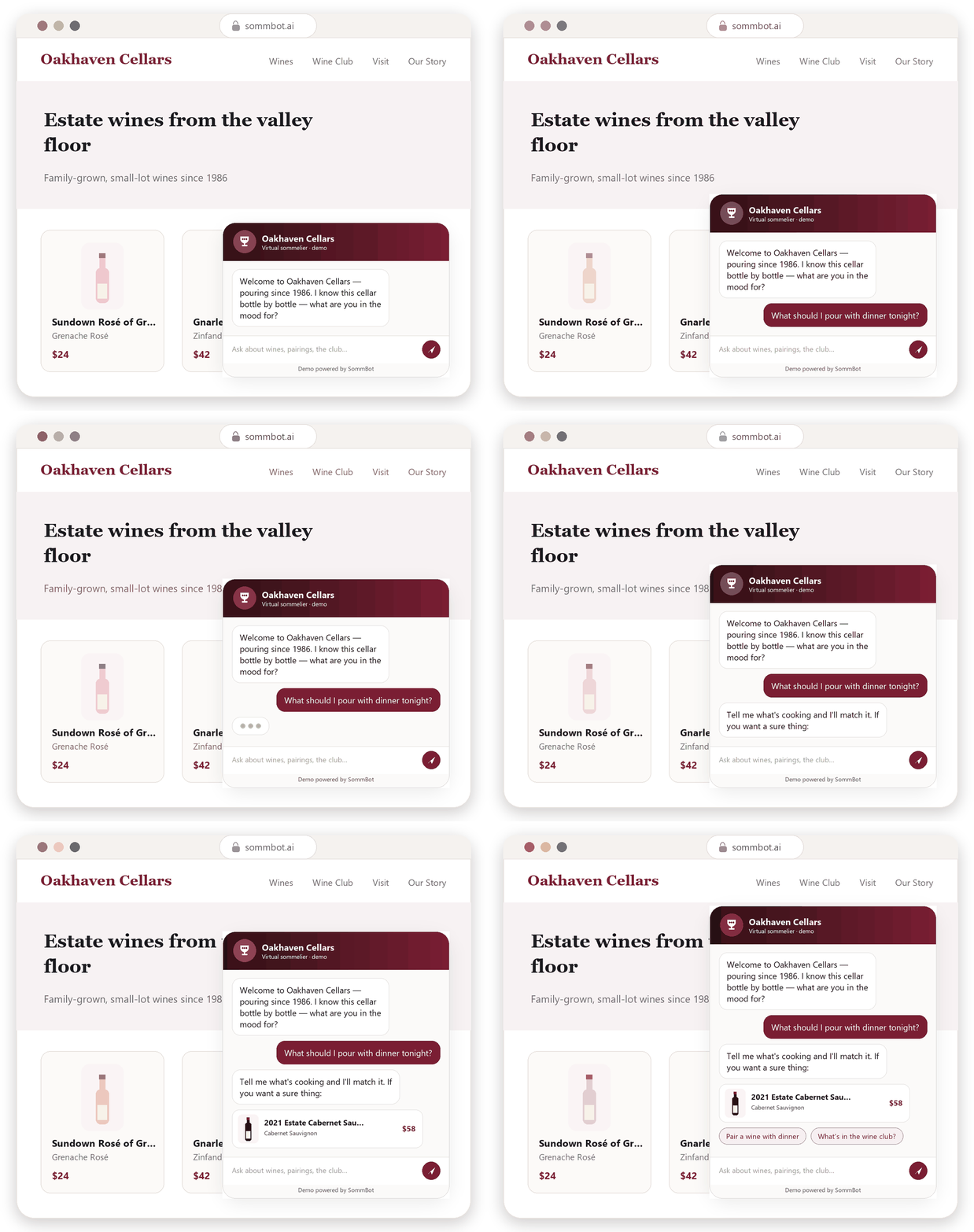
Picture a shopper who lands on your winery's site with real intent to buy. They have a dinner on Saturday, a budget in mind, and no idea which of your forty-odd SKUs to choose. They type "red" into the search bar, get thirty results, open three tabs, compare tasting notes they don't fully understand, and close the browser. Nobody was rude. Nothing broke. You just lost a sale to indecision.
This is the quiet failure mode of most beverage and CPG storefronts, and it's exactly the gap AI guided selling is built to close. The catalog is fine. The photography is good. But the two tools we hand shoppers — a search box and a wall of filters — both assume they already know what they want, in your vocabulary. The people most likely to buy are often the ones least able to describe the product the way you've labeled it.
Guided selling flips the burden. Instead of asking the shopper to translate a vague craving into the right query, it asks a few plain questions and does the translating for them. It's the difference between "here are all our wines, good luck" and "tell me about the dinner — I'll pick three."
Why search and filters fail your most ready buyers
Search and filtering are precision tools. They work beautifully for a shopper who knows the producer, the vintage, or the exact varietal they're after. That shopper is already a customer in all but name. The problem is everyone else — and everyone else is the majority.
Consider what a filter bar actually demands from a first-time visitor:
- Vocabulary they may not have. "Tannic," "unoaked," "high-acid," "natural" — these are our words, not theirs. A shopper who wants "something smooth that won't fight the steak" has no filter to click.
- Decisions in the wrong order. Filters force choices by attribute (region, price, type) when shoppers think by occasion (a gift, a weeknight, a party).
- Cognitive load that grows with your catalog. The bigger and better your range, the more overwhelming the unguided grid becomes. Success punishes you.
- No recovery from a dead end. Zero results or thirty results both stall the shopper, and neither offers a next step. A person leaves; a conversation asks another question.
None of this means you should rip out search — keep it for the buyers who love it. But leaning on it as your only discovery path means abandoning the shoppers who need the most help precisely when they're closest to buying. It's the same leak we covered in why winery websites lose buyers at the wine list: the list is where undecided visitors go to feel lost.
What AI guided selling actually is
Guided selling is any experience that narrows a large set of options down to a confident recommendation by asking about the shopper's needs rather than the product's attributes. It's the digital version of what a good salesperson does on the floor: a few questions, a little listening, then two or three suggestions with a reason attached.
AI guided selling does this through conversation instead of a rigid quiz. The distinction matters:
A quiz is a decision tree. A conversation is a dialogue.
A static quiz asks fixed questions in a fixed order and can't handle "actually, make it two bottles, one for my in-laws who like sweeter wine." A conversational system can follow the tangent, hold context, and adjust. It also lets the shopper lead — some want three questions and a pick, others want to talk through the whole dinner menu. Good guided selling meets both. This is the core idea behind conversational commerce for food and beverage brands: the interface bends to the customer, not the reverse.
The conversation is the new filter
Here's the mental shift. Every question a guided-selling assistant asks is a filter the shopper never has to understand. When someone says "I'm bringing wine to a friend who only drinks white, and I want to spend around $30," they've just applied three filters — type, price, and gift context — in one plain sentence. Behind the scenes the assistant maps that to your actual catalog and inventory and returns two in-stock bottles with a sentence on why each fits.
That last part is what separates guided selling from a glorified search alias. The value isn't only the shortlist — it's the reasoning. "This one because it's crisp enough for the patio but not so lean it disappears next to appetizers" does work a filter can't: it builds the shopper's confidence to click buy. Pairing questions are the clearest example, which is why we treat them as their own discipline in answering "what pairs with this?" at scale.
What good AI guided selling looks like on a beverage site
Not every chatbot is doing guided selling, and a bad one can erode trust faster than no bot at all. The behaviors that matter:
- It recommends from your real catalog only. Live products, current vintages, actual prices, and real inventory — never a plausible-sounding wine you don't sell or can't ship.
- It refuses to guess. When it doesn't know, it says so and offers to connect the shopper to a person, rather than inventing a tasting note or a health claim.
- It respects compliance. Shipping rules, age gating, and what you can and can't claim vary by state and product. Guardrails belong in the system, not in a disclaimer nobody reads — a topic worth its own read on compliance-safe AI for beverage DTC.
- It hands off cleanly. A high-value gift order or a picky question should reach a human with the context already gathered, not restart from zero.
- It speaks in your voice. The recommendations should sound like your tasting room, not a generic assistant.
This is the model SommBot is built around: a guided-selling concierge that installs on your existing store, knows your approved catalog and content, and backs up your staff instead of replacing them. The goal isn't a flashy gadget on the homepage — it's a shopper who reaches checkout feeling like someone helped them choose.
Guided selling is only as good as what you feed it
The uncomfortable truth: an AI assistant can't recommend with reasoning your own content doesn't contain. If your product pages say "notes of dark fruit" and nothing about occasion, weight, or who it's for, the assistant has thin material to work with. Improving discovery starts upstream, with descriptions written to sell and to inform the machine — see writing product descriptions that sell (and feed your AI).
Two practical moves before you launch anything:
- Capture the "why," not just the "what." For each product, write down the occasions it suits, what it pairs with, who tends to love it, and what to reach for instead when it's sold out. That's the raw material of a good recommendation.
- Keep the source of truth in sync. Prices, vintages, and stock change constantly. Guided selling that recommends an out-of-stock bottle does damage, so the assistant has to read from your live catalog, not a stale copy.
Done well, guided selling doesn't just lift conversion — it teaches you what shoppers actually want in the words they use, which feeds everything from merchandising to email. It's a natural extension of the same thinking behind personalization at scale with AI recommendations.
Start small, and measure discovery
You don't need to reinvent your store. Add a guided path alongside search — a simple "help me choose" entry point — and watch what happens to the shoppers who use it. Track how many reach a product page, how many add to cart, and how often the assistant hands off to a human. Those numbers tell you whether discovery is working far better than a bounce rate ever will.
Product discovery isn't broken because your products are wrong. It's broken because the interface asks undecided shoppers to behave like experts. Guided selling meets them where they are — with a question, not a filter wall. If you want to see what that feels like on a real catalog, try a SommBot demo and watch a vague craving turn into a confident three-bottle pick.