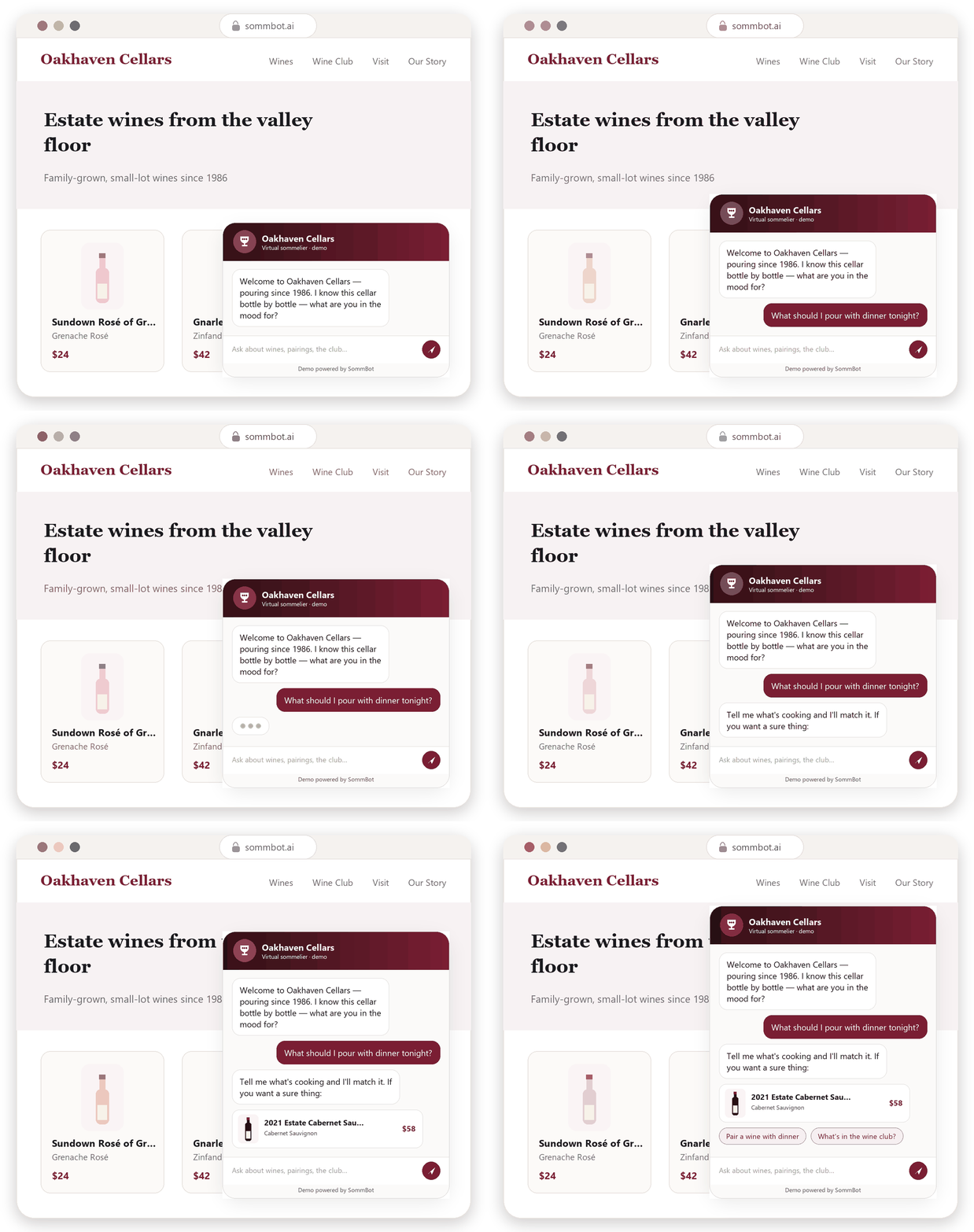
"What pairs with this?" is the question a wine shopper asks right before they buy — or right before they close the tab. It's the moment a bottle stops being a label and becomes Thursday-night salmon, a housewarming gift, or the reason someone spends $48 instead of $18.
In a tasting room, that question gets answered in four seconds by a person who knows the wine. Online, it usually gets silence. The shopper lands on a product page, wonders whether the Grenache works with the mushroom risotto they're planning, finds no answer, and drifts off to search elsewhere. The intent was there. The answer wasn't.
A wine pairing chatbot closes that gap. It answers pairing questions instantly, in your brand's voice, using your real catalog — and because pairing is such a high-intent question, a good answer often leads straight to the cart. This is where conversational AI earns its keep, and it's worth understanding exactly how a pairing answer becomes a sale.
Pairing is the highest-intent question in wine
Most questions a shopper types into a site are logistical: shipping cost, return policy, whether you deliver to their state. Pairing is different. Someone asking "what goes with duck?" or "which of your reds works for a steak dinner?" is not browsing. They have an occasion, a dish, and a willingness to buy the right bottle for it.
That's the tell. Pairing questions carry context that pure product questions don't. The shopper has already decided to drink wine with a specific meal — they just need help choosing. Answer well and you're not persuading a skeptic; you're removing the last bit of friction between a motivated buyer and checkout. Fail to answer and you lose them at the exact point of highest intent, which is one of the quieter reasons winery websites lose buyers at the wine list.
Why a wine pairing chatbot beats a static pairing chart
Plenty of sites already "answer" pairing — with a chart. Reds with red meat, whites with fish, a nice grid of icons. It's better than nothing, but it doesn't match how people actually ask.
Real shoppers don't think in categories. They think in specifics: "I'm making Thai green curry, is your Riesling too sweet?" or "we're doing a cheese board with a lot of blue cheese." A static chart can't parse that. A conversational tool can, and that's the core advantage:
- It handles the actual dish, not a category. "Spicy" and "creamy" and "grilled" all change the recommendation, and a conversation can weigh them.
- It recommends bottles you actually sell. A generic AI might suggest a Barolo you don't carry. A branded pairing chatbot only points to your in-stock catalog, so every answer is shoppable.
- It works both directions. Shoppers ask "what pairs with this wine?" from a product page, and "what wine pairs with this dish?" from a recipe or a blank search. One tool covers both.
- It sounds like you. The tone of a small family estate should read differently from a punchy natural-wine label. Voice is part of the sale.
This is the difference between a lookup table and a conversation — and it's the same shift that turns a passive FAQ into an AI sommelier that helps people choose rather than just look things up.
From "what pairs with this?" to add-to-cart
Answering the question is only half the job. The reason pairing is such a valuable use case is that the answer naturally contains a product — so the path to purchase should be built in, not bolted on.
A well-designed pairing exchange does a few things in sequence:
It names a specific bottle, not a style
"A medium-bodied red" is a dead end. "Our 2021 Estate Grenache — bright enough for the tomato, soft enough for the herbs" is a recommendation someone can click. Specificity is what converts.
It links directly to that product
The pairing answer should surface the actual product with an add-to-cart path, not send the shopper back to hunt through the catalog. Every extra click after "yes, that one" is a chance to lose them.
It's ready to trade up or across
If the perfect pairing is sold out, a good tool offers the closest in-stock alternative instead of a dead end. And when a shopper is buying one bottle for a dinner, that's a natural, non-pushy moment to mention a mixed case or a club that ships seasonal pairings. Done with restraint, this is exactly the kind of AI guided selling that raises average order value without feeling like a sales pitch.
What a wine pairing chatbot needs to answer well
Here's the part most teams underestimate: an AI is only as good as what you feed it. A pairing tool that hallucinates pairings, or recommends a vintage you sold out of last spring, does more damage than no tool at all. Getting this right is mostly a content-and-data exercise.
To answer pairing questions reliably, the system needs:
- Rich, structured tasting notes. Body, acidity, tannin, sweetness, oak, dominant flavors. These are the raw material of every pairing decision, which is one reason writing product descriptions that also feed your AI pays off twice — once for shoppers reading them, once for the tool reasoning over them.
- Live inventory and pricing. The tool must know what's actually in stock right now, so it never recommends a bottle a shopper can't buy.
- Approved, brand-owned content only. Pairings should draw from your notes and your winemaker's guidance — not the open internet — so answers stay accurate and on-brand.
- A clear "I don't know" path. When a question falls outside what it can answer confidently, it should say so and hand off, not improvise.
SommBot is built around exactly this constraint: it answers from a winery's approved catalog and content, refuses to guess when it doesn't have the answer, and hands off to a human when a question needs one. That refusal to bluff is a feature, not a limitation — it's what makes the recommendations trustworthy.
Answer with confidence — and know when to stop
Pairing sits close to two lines you don't want to cross: health claims and compliance. A shopper might ask "is this wine good for my heart?" or "can you ship this to Utah?" The right behavior is to stay firmly in its lane — offer the pairing, decline to make health or medical claims, and defer shipping and age-gating questions to accurate, compliant answers or a human. If you sell across state lines, this matters enough to design for deliberately; it's the core of building a compliance-safe AI for beverage DTC.
A pairing chatbot that knows its limits actually sells more, not less. Shoppers can feel the difference between a tool that confidently helps and one that will say anything. The former earns the click. The latter earns a refund request.
The takeaway
Pairing is the moment your shopper is most ready to buy and most likely to leave. A wine pairing chatbot meets that moment the way your best tasting-room staff would: with a specific, in-brand, in-stock recommendation and an easy way to act on it — at 2 p.m. or 2 a.m., on every product page at once. It backs up your team instead of replacing them, and it turns your highest-intent question into your most reliable path to the cart.
If you want to see what that looks like on your own catalog, book a SommBot demo and watch it answer "what pairs with this?" in your voice.