The tasting room closes at five. Your website never does.
Look at when people actually visit a winery or beverage site, and a real pattern emerges: a lot of the traffic lands at night. After dinner, on the couch, phone in hand, maybe a glass already poured. Someone is trying to remember whether the Pinot they loved at a restaurant is the one you make, whether you ship to their state, whether the club is worth joining. They have questions — and nobody is there to answer them.
That gap, between when buyers browse and when your team is awake, is exactly where 24/7 wine sales are won or lost. The visitor either finds an answer and moves toward checkout, or hits silence and closes the tab. This piece is about closing that gap without hiring a night shift.
Why so much of your traffic is a night shift
Wine buying is emotional and unhurried, and the moments that trigger it rarely happen at 11 a.m. on a Tuesday. They happen after a good meal, during a weekend scroll, while planning a gift, or right after someone tastes something memorable and pulls out their phone to find more. Those are evenings and weekends — precisely when your tasting room lights are off and your inbox is unattended.
There's a second reason the pattern skews late. Email campaigns, social posts, and event follow-ups often go out in the afternoon and get opened hours later. You're effectively scheduling demand for a time when no one is home to meet it. The traffic isn't random; it's arriving on a shift your staff doesn't work.
None of this is a problem as long as the site can carry a real conversation on its own. The trouble is that most winery sites can't. They present a wine list and a shipping page and hope the visitor connects the dots unassisted — which, as we've written about in why winery websites lose buyers at the wine list, is where a lot of ready-to-buy shoppers quietly give up.
What browsers actually want to know at 10 p.m.
An after-hours visitor is not window-shopping the way a tasting-room guest is. They tend to arrive with a specific, answerable question standing between them and a purchase. The most common ones:
- "What pairs with what I'm cooking Saturday?" — a recommendation request, not a catalog search.
- "Do you ship to my state, and when would it arrive?" — a compliance and logistics question that kills carts when unanswered.
- "Which of these should I actually get?" — a guided-selling moment where a wall of SKUs creates paralysis.
- "Is the club worth it, and can I cancel?" — a commitment question that needs a real answer, not marketing copy.
- "I need a gift by Friday — what's good and how does it arrive?" — high-intent, time-sensitive, easy to lose.
Every one of these is answerable from information you already have: your catalog, tasting notes, shipping rules, and club terms. The problem is never that the answer doesn't exist. It's that at 10 p.m. there's no one to deliver it in the moment the question forms. This is the core of conversational commerce for food and beverage brands — turning a static page into something that responds.
The real cost of the unanswered question
An unanswered question rarely produces an angry email. It produces silence. The visitor doesn't complain; they just leave, and you never learn what stopped them. Multiply that across every evening of the week and the lost revenue is invisible on your dashboard precisely because it never became a transaction.
The friction compounds at the worst possible spot: right before checkout. A shopper with a full cart who suddenly wonders whether you ship to their state, and can't quickly confirm it, is a shopper about to abandon. That hesitation is a leading cause of drop-off — see our field notes on abandoned cart recovery for beverage and CPG brands. A recovery email the next morning is useful, but it's a second-best fix. Answering the question in the moment is the first-best one.
Building an after-hours engine for 24/7 wine sales
The goal isn't a generic chatbot bolted onto a corner of the page. It's a concierge that behaves like your best tasting-room host would if they worked the night shift — knowledgeable, on-brand, and honest about what they don't know. Three principles make that work.
Answer only from approved content
A wine concierge that guesses is worse than no concierge, because a confident wrong answer about allergens, alcohol content, shipping legality, or a health claim is a liability. The right approach grounds every response in your actual catalog and approved copy, and refuses to improvise beyond it. This is also what keeps you on the right side of a genuinely tricky area — worth reading our take on compliance-safe AI for shipping, age-gating, and claims before you turn anything on.
Meet people where they get stuck
The concierge should be present on the pages where questions form — the wine list, the product page, the shipping and club pages — not hidden behind a support link. When a visitor asks "what goes with lamb," it should recommend a real bottle from current inventory, at the real price, and offer to add it to the cart. That's the difference between deflecting a support ticket and answering "what pairs with this?" at scale in a way that actually sells.
Hand off instead of hallucinating
Some questions need a person: a wholesale inquiry, a damaged shipment, a nuanced allocation request. An after-hours concierge earns trust by recognizing those and capturing the lead — name, question, contact — for your team to handle in the morning, rather than faking an answer. Backing up staff is the point; replacing them isn't. This is the same instinct behind turning tasting-room hospitality into website conversions: the warmth of a good host, translated to the screen.
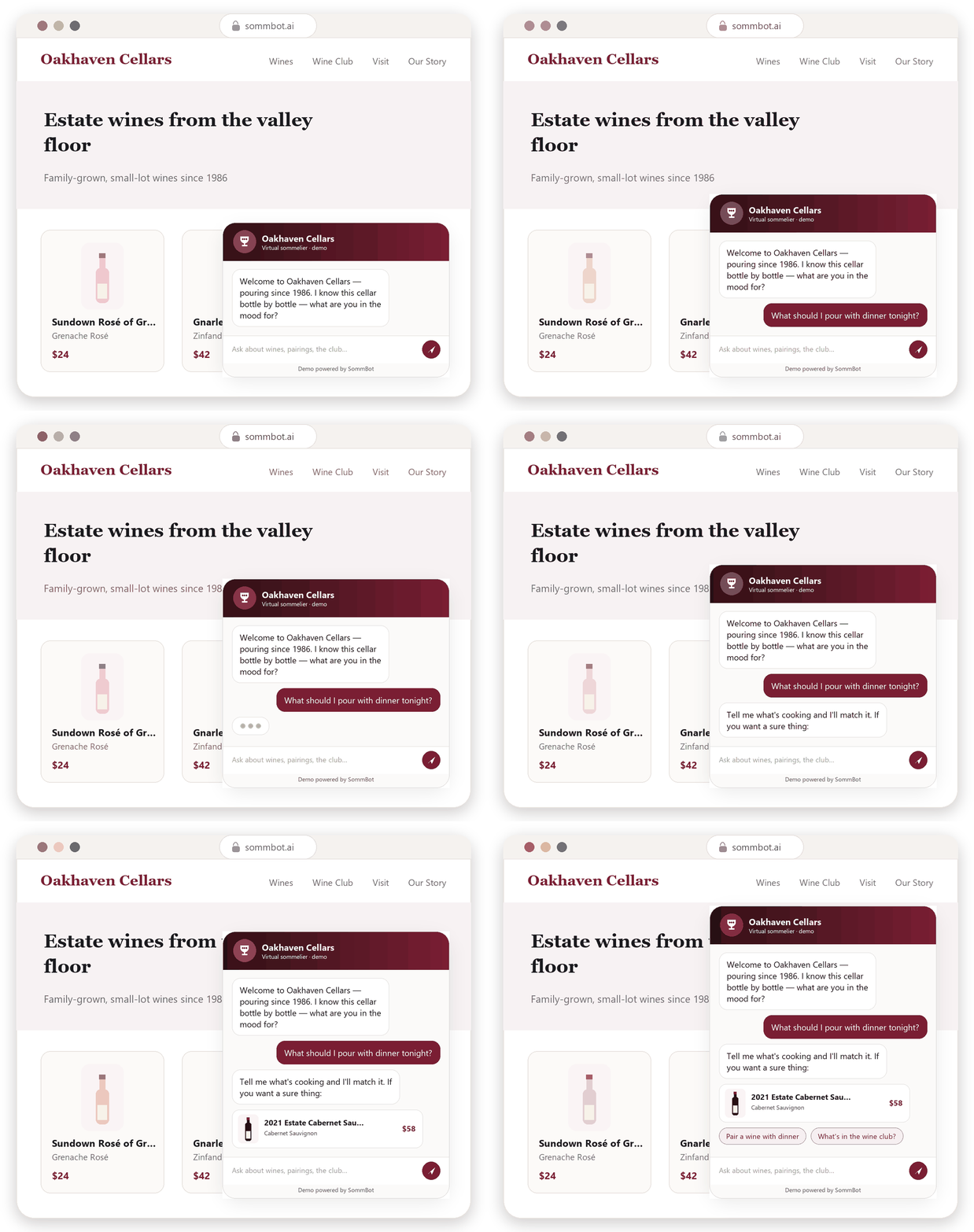
This is the model SommBot is built on — a concierge installed on your existing site that knows your real catalog and vintages, speaks in your brand's voice, and hands off to a human when a question calls for one. If the idea of an AI sommelier is new to you, our primer on what an AI sommelier is and how it sells more wine online is a good place to start.
What "always-on" does beyond the sale
Direct checkout is the obvious win, but an after-hours concierge produces value even when the visitor doesn't buy that night. A shopper who isn't ready to purchase can still be nudged toward the club, pointed to a tasting event, or asked for an email so you can follow up. The one-time buyer who came for a single bottle is exactly the person you want to convert into a member, and a conversation is a far better tool for that than a banner.
There's a quieter benefit, too: you finally see what people ask when no one's watching. Recurring questions about a confusing shipping rule, a vintage that's always sold out, or a pairing you never thought to feature are a free, standing focus group. Feed those insights back into your product pages, your email flows, and your catalog, and the whole operation gets sharper — not just the overnight hours.
Turning night traffic into morning revenue
Your after-hours traffic is already there. The only question is whether it meets a helpful, on-brand concierge or a silent wall of SKUs. One captures 24/7 wine sales, leads, and club signups while you sleep; the other lets them evaporate without a trace. For a busy DTC brand, that's one of the few upgrades that works entirely on the margins you're currently throwing away.
If you want to see what an always-on sommelier would say to your own visitors, try a live demo or talk to us about your catalog. The tasting room can stay closed. The selling doesn't have to stop.