Walk into a good tasting room and something happens before you taste anything. Someone reads you. Are you a curious beginner or a collector? Buying a gift or a case for Thanksgiving? Within a minute or two, a host is pouring the right thing, telling the story behind it, and quietly steering you toward the two bottles you will actually love. You often leave with more than you planned to buy, and you feel good about it.
Now look at the same brand's website. A grid of bottles. A filter for red or white. A cart. Nobody reads you, nobody pours, nobody tells a story. The visitor is left to do all the work of a sommelier on their own. That gap is the single biggest lever in winery website conversion, and almost nobody is pulling it.
The problem usually isn't traffic or design polish. It's guidance. This piece is about translating the hospitality that makes your tasting room work into the online buying journey, without turning your site into a gimmick.
What the tasting room actually does that your website doesn't
It helps to name the jobs a great host performs, because most of them are invisible until you try to reproduce them online. A host:
- Qualifies gently. A few friendly questions reveal budget, occasion, and taste before anything gets poured.
- Narrows the field. Instead of "here are 24 wines," it becomes "based on that, try these two."
- Tells the story. The vineyard block, the winemaker's choice, why this vintage is different. Story is what turns a commodity into a purchase.
- Handles objections in real time. "Will this ship to Texas?" "Is it too tannic for someone new to reds?" "Can I make this a gift?"
- Suggests the next thing. A pairing, a larger format, the club that makes the case cheaper.
A static product grid does none of this. It presents inventory and hopes the visitor self-serves. Many shoppers won't. They stall, second-guess, and close the tab, which is why so many winery sites quietly lose buyers at the wine list even when the wine and the traffic are both good.
Map each hospitality moment to an online touchpoint
You don't need to recreate a physical room. You need to recreate the sequence a host walks a guest through, and attach each step to something your website can actually do.
Greeting and qualifying
In person this is small talk. Online it can be a short, opt-in prompt: "New to our wines, or looking for something specific?" The goal isn't to interrogate; it's to give the visitor a lane. Even a simple choice between "help me choose a gift" and "I know what I like" changes everything that follows.
The pour: guided recommendations
This is where guidance beats browsing. Instead of asking a first-time visitor to evaluate a whole catalog, surface two or three bottles that fit what they just told you, with one clear sentence on why each one. Reducing choice is not dumbing down; it's the same kindness a host offers when they say "let's start you here."
The story
Attach the narrative to the bottle at the moment of decision, not buried on an "Our Story" page nobody clicks. Where does the fruit come from? What makes this vintage worth trying now? A single vivid detail does more for conversion than three tasting-note adjectives.
Objections and logistics
Shipping rules, age verification, gift options, club terms. In the room these get answered instantly. Online they're often the exact friction that kills the sale at checkout. Answering them in context, right where the doubt appears, is quiet but powerful conversion work.
Guidance, not decoration, is the real conversion lever
It's tempting to treat winery website conversion as a design or discount problem: better photography, a bigger banner, another 10% code. Those help at the margins. But the tasting room doesn't convert because of its lighting. It converts because a knowledgeable person removes uncertainty at the exact moment a guest feels it.
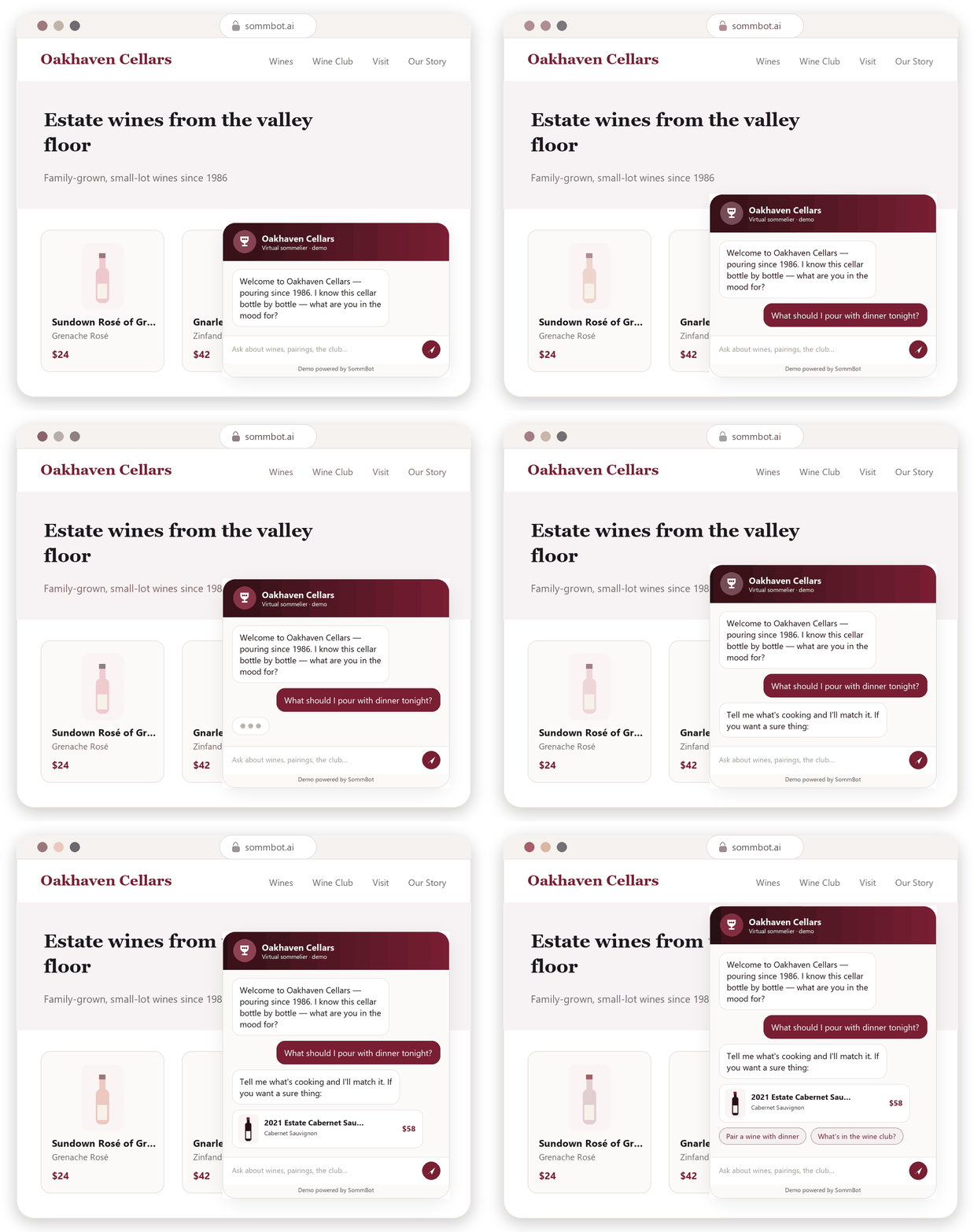
Online, that means moving from browsing to guided selling. A visitor who types "what pairs with a spicy pork dish?" or "I liked your 2021 Syrah, what else?" is telling you precisely how to help them. Being able to answer pairing questions at scale, in your own voice and against your real catalog, is closer to hospitality than any static FAQ ever gets.
This is the natural home for a tool like SommBot: a concierge that installs on your existing site, knows your actual wines, vintages, prices, and inventory, speaks in your brand's voice, and only answers from content you've approved. It backs up your staff rather than replacing them, and when a question needs a human, it hands off instead of guessing.
Extend hospitality to the hours the room is closed
Here's the part that changes the math. Your tasting room has hours. Your website doesn't. A meaningful share of online wine shopping happens at night, on a phone, long after the last guest has left the property.
Those late visitors get the worst version of your brand: no host, no guidance, just a grid and their own hesitation. Giving them a knowledgeable, on-brand guide after hours is one of the highest-leverage moves available, because you're capturing intent that would otherwise evaporate by morning. We go deeper on this in capturing wine sales when the tasting room is closed, but the principle is simple: hospitality shouldn't clock out at 5pm.
Turn a good first purchase into a relationship
The best hosts don't just close a sale; they set up the next visit. Online, the equivalent is nudging a happy first-time buyer toward the club, the allocation list, or a reorder, at the moment they're most satisfied.
This should feel like a recommendation, not a pop-up ambush. A guest who just bought two bottles they love is exactly the right person to hear "members get this at case pricing and first access to new releases." Done conversationally, this is how you go from a one-off transaction to recurring revenue, the same way a warm tasting-room relationship becomes a wine-club membership. If that's your goal, it's worth reading how brands are turning one-time buyers into members through conversation rather than discounting.
Keep the human in the loop, and measure the right things
Translating hospitality online is not about automating your team out of the picture. The warmth in your tasting room comes from people, and the online version works best when it knows its limits. A good rule: the site should confidently handle the routine (pairings, shipping, gifting, club basics) and hand off gracefully the moment a question gets personal, high-value, or genuinely uncertain.
To know whether it's working, watch behavior that mirrors the room, not just top-line revenue:
- How many visitors engage with guidance versus bouncing off the grid.
- Whether guided sessions convert at a higher rate than unguided ones.
- Average order value when someone gets a recommendation versus when they don't.
- How often shipping and compliance questions get answered before, rather than at, checkout.
The takeaway
Your tasting room already proves the thesis: people buy more, and buy more happily, when someone reads them, guides them, and tells the story. The website version of that isn't a fancier grid or a louder banner. It's guidance delivered at the moment of doubt, in your voice, backed by real inventory, and handed to a human when it matters.
If you want to see what that looks like on your own catalog, book a SommBot demo and watch it field the questions your tasting-room hosts answer every day.