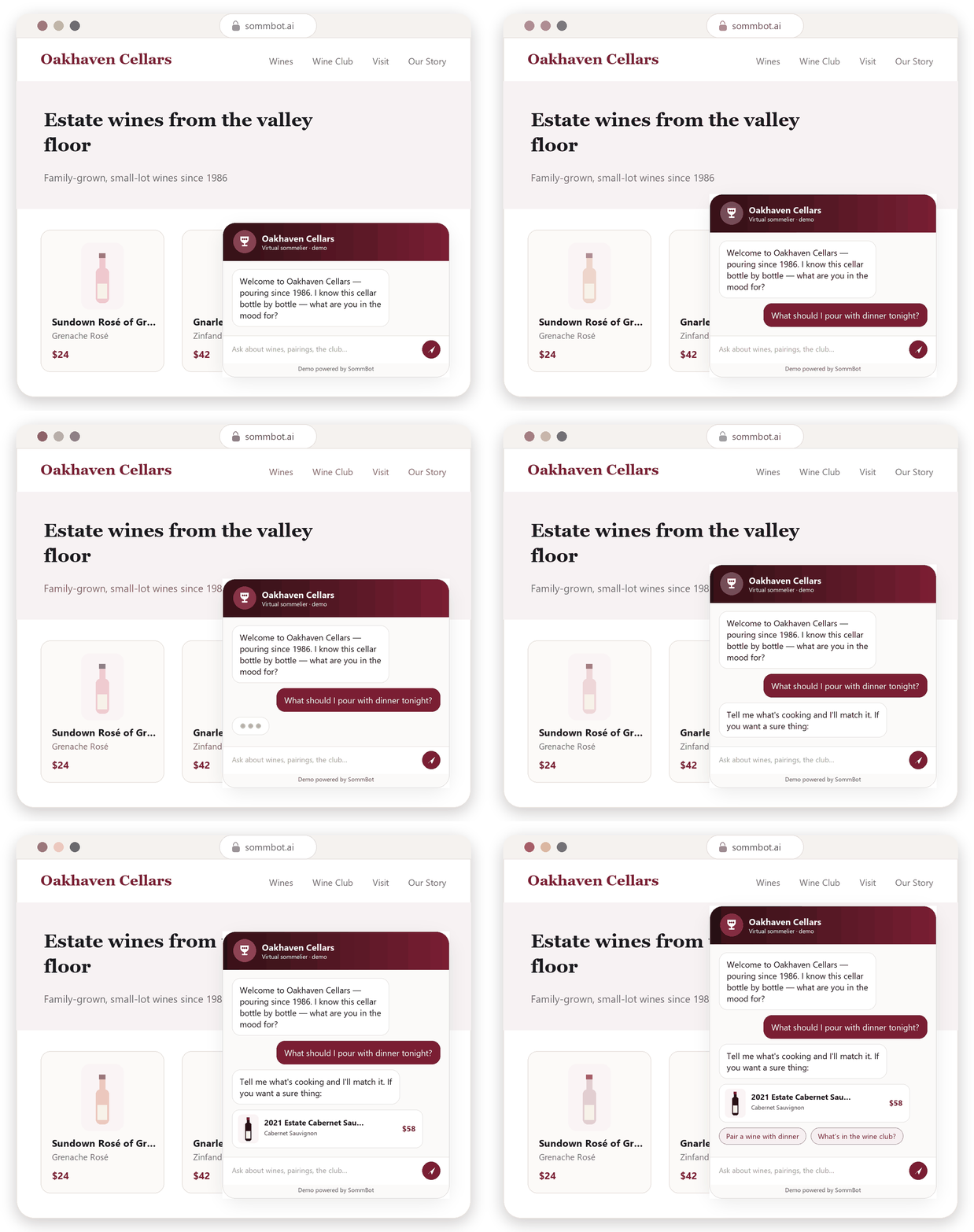
Every ecommerce brand has an FAQ page, and almost no one reads it the way it was written. A shopper with a real question — "Will this survive shipping to Texas in July?" or "What's actually in the summer club box?" — doesn't want to scan a dozen collapsed headings hunting for a half-answer. They want to ask, and get a reply.
That gap between how customers ask and how FAQ pages answer is where support tickets, abandoned carts, and quietly lost sales come from. The whole promise of AI customer support for ecommerce is closing that gap: turning a static reference page into a conversation that responds in the buyer's own words, at the exact moment they're deciding whether to check out.
Done well, it earns trust and lifts routine work off your team. Done carelessly, it invents answers and creates new problems. The difference is entirely in how it's built.
Why static FAQ pages quietly fail
An FAQ page isn't wrong, exactly. It's built on assumptions that rarely hold once a real customer arrives.
- It's organized by your logic, not theirs. You file answers under "Shipping," "Returns," and "Club." The customer is thinking, "Can I still skip before the July charge?" — a question that spans three sections and matches none of your headings.
- It goes stale. Prices move, a vintage sells out, a new state opens for shipping. The page keeps confidently stating what was true last quarter.
- It treats everyone the same. A first-time visitor and a five-year member get the identical wall of text, neither of them tailored to what they actually need.
- It can't follow up. When an answer covers 80% of the question, there's nowhere to ask the other 20%. The shopper bounces, or emails — and now it's a ticket anyway.
The irony is that teams keep expanding the FAQ to head off tickets, which makes it longer, which makes it less likely anyone finds their answer at all. Length is not the same as helpfulness.
How conversational AI customer support changes the ecommerce experience
Replace the page with a conversation and the dynamics invert. Instead of forcing customers to translate their question into your categories, you let them ask plainly and answer directly.
- A shopper types "something red but not too heavy for grilled salmon" and gets two specific bottles from your catalog — not a shrug and a search box.
- Someone asks "do you ship to Illinois?" and gets a straight yes or no, followed by "want me to add it to your cart?"
- A member asks "what's my discount on a case?" and gets the real answer, then a nudge toward the follow-up they'd otherwise have emailed about.
This is what people mean by conversational commerce — meeting buyers in dialogue rather than in menus. If you want the broader playbook, our primer on conversational commerce for food and beverage brands covers the fundamentals. The point for support is simple: a conversation resolves the question and keeps the sale moving in the same breath. A tool like SommBot sits on your existing site and does exactly this, answering pairing, club, gifting, and shipping questions in your brand's voice, around the clock.
Approved content is the whole game
Here's the part that separates a trustworthy assistant from a liability: the chat bubble is not the valuable part. The source of truth behind it is.
A generic model left to improvise will cheerfully invent a tasting note, guess a shipping rule, or imply a health benefit you'd never put in writing. For a beverage or CPG brand, that's not a cute mistake — it's a compliance and trust problem. The assistant has to be wired to a narrower discipline:
- Answer only from approved content — your real catalog, policies, and copy — not from the open internet.
- Refuse to guess. When it doesn't know, it says so and offers a human, rather than filling the silence with a plausible-sounding fabrication.
- Never make health or compliance claims it isn't authorized to make. Age-gating, shipping eligibility, and "is this good for you" questions need guardrails, not improvisation.
SommBot is built around this posture — approved content only, with a clean handoff to staff when a question falls outside it. It's also why the content behind the assistant has to stay current; a bot answering from last season's catalog is just a faster way to be wrong. Keeping your product catalog and chatbot in sync is the unglamorous work that makes the whole thing trustworthy, and getting the shipping, age-gating, and claims guardrails right is what keeps it safe.
What actually comes off your team's plate
The goal of AI customer support in ecommerce isn't to eliminate your support team — it's to stop drowning them in the same handful of questions. In practice, the load that lifts is the repetitive, low-judgment kind:
- "Where's my order, and when will it arrive?"
- "Do you ship to my state?"
- "What's in the current club shipment?"
- "Is this vegan / lower in sugar / gluten-free?" (answered from approved copy only)
- "What pairs with this?" — asked dozens of times a week, now answered instantly.
What stays with humans is exactly what should: complaints, unusual edge cases, high-value members who want a person, and anything the assistant is told to escalate. That's a healthy division of labor. We go deeper on protecting service quality while trimming cost in our guide to cutting customer-service costs without cutting quality, but the headline is that a good assistant absorbs the volume so your team can spend its attention where it changes an outcome.
Making the switch without breaking trust
Moving from FAQ page to conversation is less a rip-and-replace than a disciplined setup. A practical sequence:
Start from real questions, not imagined ones
Mine your support inbox, live-chat logs, and tasting-room notes for what people actually ask, in their actual words. That list — not a marketing brainstorm — is your content backbone.
Feed it approved content and keep it fresh
Point the assistant at your catalog, policies, and existing FAQ copy, then make one person responsible for keeping it synced as prices, inventory, and shipping rules change.
Decide the handoff and refusal rules up front
Define what triggers a human handoff and what the assistant should decline to answer. A confident "let me connect you with someone" beats a confident wrong answer every time.
Read the transcripts
The conversations become a live feed of what customers are confused about — a gift for your product pages, your real FAQ, and your merchandising. Don't set it and forget it; read what people ask.
And keep the FAQ page, by the way. It still helps search engines and skimmers. The conversation simply becomes the front door for everyone who'd rather ask than scroll.
The takeaway
A static FAQ answers the questions you thought to write down, in the order you happened to write them. A conversation answers the question in front of the customer, in their words, while they're still deciding. For beverage and CPG brands especially, the winning version is narrow and honest — grounded in approved content, quick to hand off, and never guessing.
If you want to see what that looks like on a real catalog, try a SommBot demo and ask it the awkward questions your FAQ page can't answer.