Customer support has a quiet math problem. As orders grow, tickets grow with them — and the reflex is to throw cheaper labor or faster canned replies at the queue. That works for the budget and quietly erodes the experience.
There is a better lever. Most of what lands in a winery or beverage brand's inbox is the same short list of questions asked a thousand different ways: Where's my order? Do you ship to my state? What's in the club? What pairs with this? Answer those instantly and you free your team for the conversations that actually need a person.
That's the whole idea behind how you reduce customer service costs without cutting quality: deflect the repetitive, escalate the human-worthy. Done right, service gets faster and cheaper at the same time — not one at the expense of the other.
The real cost of support is repetition
Before you cut anything, look at what your queue is actually made of. Export a month of emails, chats, and DMs and tag each one by topic. Nearly every brand finds the same pattern: a small number of question types account for the large majority of volume.
Those questions fall into two buckets, and telling them apart is the entire strategy.
Repetitive, factual, high-volume
- Order status, shipping timelines, and tracking
- "Do you ship to [state]?" and other compliance-driven logistics
- Wine club tiers, pricing, pause/skip, and cancellation mechanics
- Basic pairing and "what's similar to the bottle I loved" questions
- Hours, tasting-room reservations, gift options, and return policy
Human-worthy and judgment-heavy
- A damaged or lost shipment tied to an upset regular
- A corporate gifting order with custom terms
- An allocation request or a member weighing a club upgrade
- Anything emotional, ambiguous, or worth a relationship
The repetitive bucket is expensive precisely because it's boring: it consumes your best people's hours on answers that never change. That's the cost you want to remove — and the good news is that it's the easiest cost to remove without anyone noticing a drop in quality.
Deflection means instant answers, not dead ends
"Deflection" sounds like brushing customers off. It shouldn't. Good deflection means the shopper gets a correct, on-brand answer in seconds — no waiting for business hours, no ticket number, no queue. That's the opposite of a worse experience.
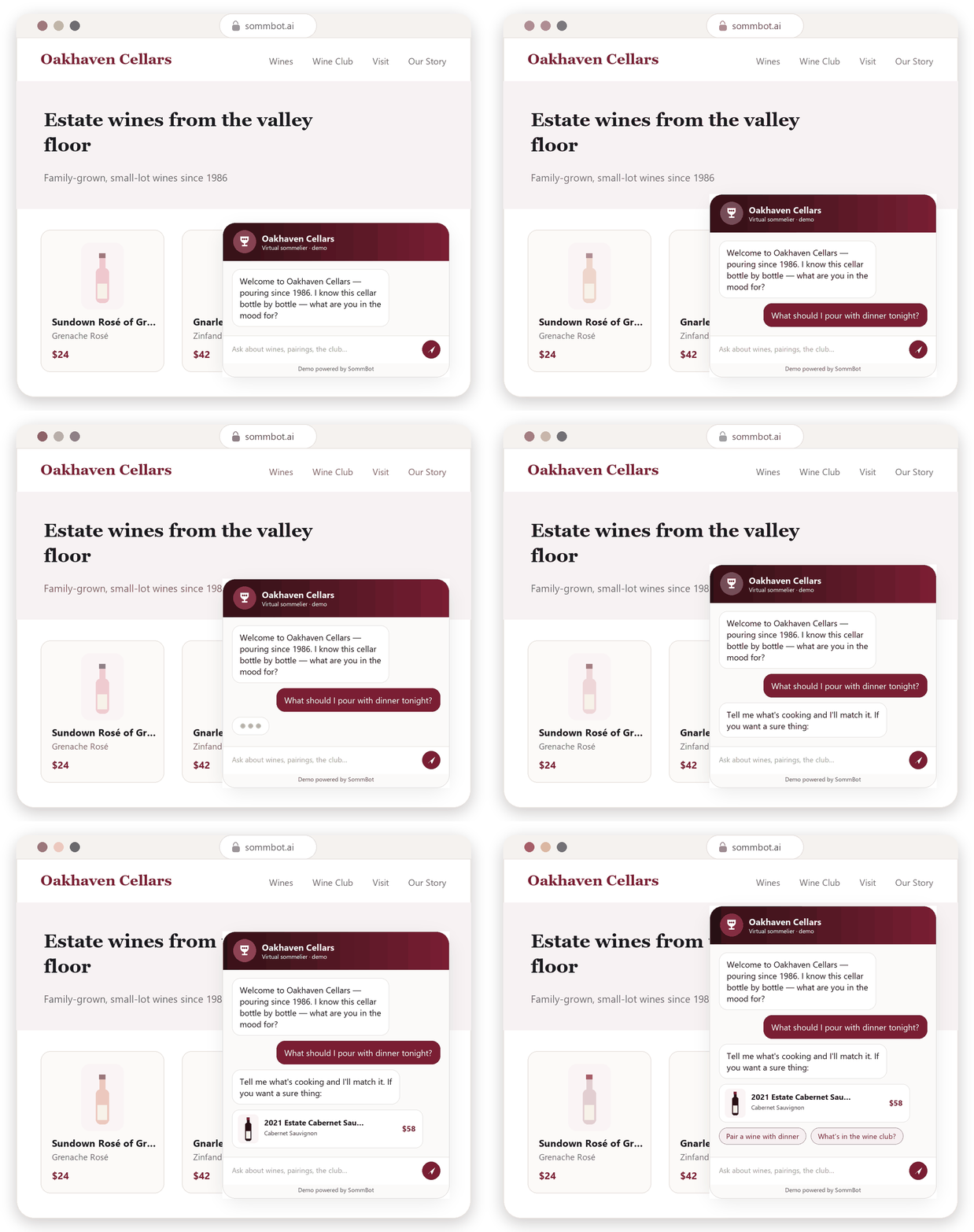
An AI concierge that sits on your existing site can resolve the repetitive bucket around the clock, pulling from your real catalog and policies. Because a lot of purchase questions arrive after the tasting room closes, that coverage also captures sales you'd otherwise lose overnight. A few constraints keep it trustworthy:
- Answer only from approved content. The AI should draw from your published policies, product data, and FAQs — never improvise. Moving from a static FAQ page to a real conversation is where most of the load actually drops.
- Refuse gracefully. If it doesn't know, or a question touches health or compliance claims, it should say so and hand off rather than guess.
- Stay in the brand's voice. A deflected answer should read like your team wrote it, not like a generic bot.
This is the role SommBot is built for: it knows a brand's actual wines, vintages, prices, and inventory, answers from approved content only, and refuses to make claims it can't back up. The point isn't to sound clever — it's to be reliably correct on the questions you're tired of answering by hand.
Escalate the questions that deserve a human
Cutting cost isn't about removing people — it's about pointing them at work worth their time. When the automated layer handles the routine, your team's day shifts from copy-pasting tracking numbers to handling the moments that build loyalty.
A clean escalation path matters as much as the deflection itself. When a question is emotional, high-value, or ambiguous, the handoff should carry full context — what the customer already asked, their order history, where they got stuck — so the human doesn't start from zero. That context transfer is what keeps quality high while the volume reaching staff falls.
How to reduce customer service costs without degrading service
The difference between an AI layer that helps and one that annoys is almost entirely in the setup. A few principles keep you on the right side of it.
Start from your real inbox
Don't guess at an FAQ. Build the answer set from the questions customers actually ask, ranked by frequency. This doubles as a content audit — gaps in your AI's knowledge are usually gaps on your website, too.
Ground everything in approved sources
Feed the system your policies, product descriptions, and shipping rules, and keep it restricted to them. This is also where compliance lives: shipping and age questions carry real legal weight, so the AI should follow compliance-safe rules for shipping and claims rather than freelance an answer.
Keep the catalog in sync
Nothing erodes trust faster than an AI quoting a sold-out vintage or last year's price. Whatever you build, make sure it stays in sync with your live catalog so every answer matches reality.
Design the handoff before you launch
Decide up front which topics always route to a person and what context travels with them. Test the escalation path as carefully as you test the answers — a smooth handoff is the difference between "AI helped" and "AI got in the way."
Measure cost and quality together
The failure mode of cost-cutting is optimizing one number in isolation. Deflection rate looks great right up until satisfaction craters. Watch both sides at once:
- Cost signals: tickets resolved without a human, first-response time, and hours reclaimed by staff.
- Quality signals: post-chat satisfaction, escalation accuracy (did the right things reach a person?), and repeat-contact rate.
- Revenue signals: questions that turned into carts, club sign-ups, and reorders.
If deflection climbs while satisfaction holds steady and revenue ticks up, you've done it right: lower cost and better service, not a trade between them.
Reduce customer service costs without the trade-off
You don't reduce customer service costs by making customers work harder or wait longer. You do it by matching each question to the cheapest source that can answer it well — software for the repetitive, people for the meaningful — and making the handoff between them seamless.
If you want to see what that looks like on your own catalog and policies, book a SommBot demo and watch it field your most common questions in your brand's voice.