Most DTC brands treat email and chat as two unrelated tools. Email lives in a marketing platform, owned by whoever writes the newsletter. Chat is a widget in the corner, owned by support — if anyone owns it at all. The two rarely talk to each other, which means each one only ever sees half the customer.
That split is the biggest hidden tax on dtc email automation. Email is patient and endlessly scalable, but it's a monologue: you send, then wait days to learn whether it landed. On-site chat is immediate and two-way, but it usually forgets the person the moment they close the tab. One channel has memory without presence; the other has presence without memory.
Put them on the same customer record and the same approved content, and something better happens. Capture, nurture, convert, and retain stop being four disconnected campaigns and become one loop — where a chat answer feeds a future email, and an email click reopens a conversation right where it left off.
Why DTC email automation needs a live front door
A nurture sequence assumes you already have the email address. Getting that address is the hard part, and a static popup offering a blanket discount is a blunt instrument — it interrupts everyone identically and collects a lot of contacts who never intended to buy.
Chat is a better front door because it earns the address in context. Someone who asks "which of your reds works with lamb?" has shown intent no popup can detect. Answer the question first, then offer to send the pairing plus a first-order note by email — now the opt-in is a favor, not a toll. That contact enters your list already tagged with what they care about, which makes every downstream send more relevant.
This is the core argument for connecting the two: chat qualifies, email sustains. If you're still deciding which tools belong in that system, our guide to a practical marketing automation stack for small DTC brands is a useful companion.
Capture: turn anonymous visitors into known contacts
Treat capture as a spectrum of intent, not a single event. Different visitors deserve different asks:
- Browsing, no signal yet: a low-friction newsletter or "new release" opt-in is plenty.
- Asking a real question: answer it in chat, then offer to email the recommendation, a pairing guide, or shipping details for their state.
- Hesitating at checkout: capture the address so you can send a gentle follow-up instead of losing them silently.
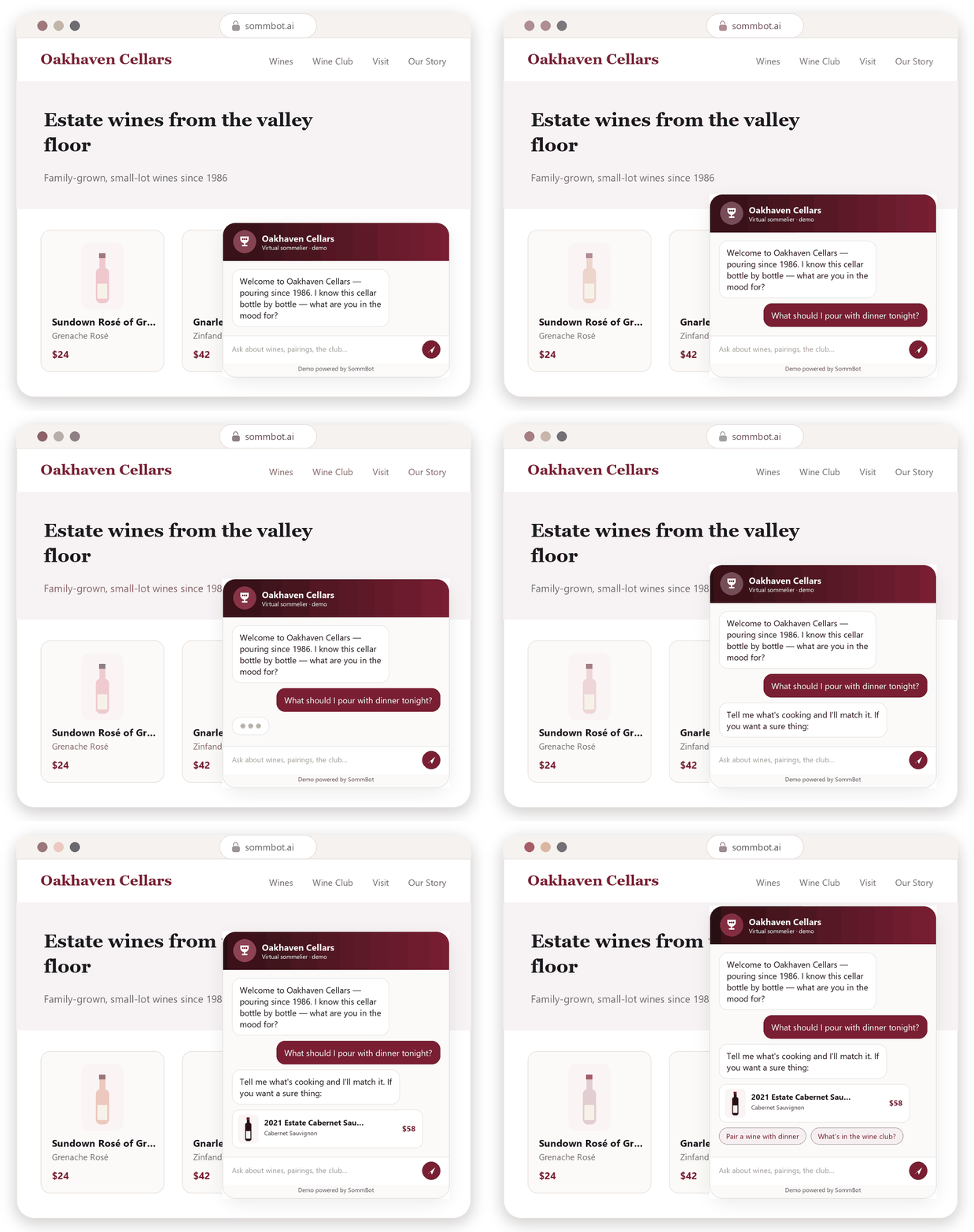
The discipline is matching the ask to the moment. A conversational assistant that already knows your live catalog can do this around the clock without a person on shift — the mechanics of that exchange are worth understanding, and our primer on conversational commerce for food and beverage brands walks through them. SommBot, for example, answers from a brand's approved content only and hands off to a human when a question goes beyond what it should guess at, so the address you capture comes with a genuinely helpful first interaction attached.
Nurture: sequences that earn the next order
Nurture is where email does its best work, because the job is repetition and timing at a scale no human can sustain. A short, well-built library covers most of it:
The sequences worth building first
- Welcome series: introduce the brand, the people, and one or two flagship products. Set expectations for how often you'll write.
- Education and story: the vineyard, the process, the reason a bottle costs what it costs. This is what turns a discount shopper into someone who values the brand.
- Replenishment nudges: for consumables, a well-timed "running low?" note is one of the highest-return sends you can automate.
- Club or subscription invitation: extended to second- or third-time buyers who've already shown they like the product.
- Win-back: a light-touch check-in for contacts who've gone quiet, ideally referencing what they bought before.
What makes these compound rather than annoy is the data flowing in from chat. If a customer told your assistant they only drink whites and ship to Texas, none of that should be a mystery to your email platform. The more each channel writes to a shared profile, the less generic every message becomes.
Convert: where chat closes what email opened
Email is excellent at driving traffic and terrible at handling the objection that shows up once the visitor arrives. That's the handoff. An email surfaces a new release; the shopper clicks through with a question — "is this vegan?", "will it arrive before Saturday?", "what's the difference between these two vintages?" — and if there's no one to answer, the tab closes.
On-site chat catches that question at the exact moment of decision, which is why it belongs in the conversion step and not just in support. It's especially powerful paired with recovery flows: chat can surface the objection in real time, and email can follow up if the cart is still abandoned an hour later. Our field guide to abandoned cart recovery for beverage and CPG brands covers how to sequence that follow-up without nagging.
Retain: replenishment, clubs, and the long game
Acquisition gets the attention, but the compounding returns live in retention. The post-purchase window is where a one-time buyer decides whether you were a transaction or a relationship.
Email handles the cadence here — order confirmation, a genuine thank-you, a check-in after the product has had time to be enjoyed, then the club or reorder invitation. Chat handles the friction: the question about a delayed shipment, the "how do I update my club preferences?" that would otherwise become a churn event. Together they turn casual buyers into members, a transition we break down in turning one-time buyers into members with conversational AI.
Keep one record, measure one journey
None of this works if the two channels drift apart. Two rules keep the loop honest:
- One customer record. Chat tags, purchase history, and email engagement should live in a single profile, so a "which reds do you carry?" question and a newsletter click aren't treated as two different people.
- One source of truth for content. Prices, inventory, shipping rules, and product facts should come from the same approved source in both channels. When a wine sells out, neither the chatbot nor the automated email should still be recommending it.
Measure the journey end to end rather than grading each channel in isolation. A chat conversation that produces no immediate sale but seeds a well-tagged contact who converts three emails later is a win — one you'll miss entirely if email and chat report to separate dashboards.
Start small, connect the two
You don't need to build the whole system at once. Pick the leakiest point — usually capture or cart recovery — and connect one chat interaction to one email sequence. Prove the loop, then extend it. The goal isn't more automation for its own sake; it's a journey where every message is a little more informed than the last, because the two channels finally share what they know.
If you want to see what a catalog-aware assistant looks like feeding that loop on your own site, book a SommBot demo and walk through it with your real wines and rules.