Most small DTC brands do not have a marketing automation problem. They have a marketing automation graveyard: a login for an email tool nobody segments, a chat widget that only says hello, a CRM half-filled with duplicate contacts, and a dashboard no one opens.
The point of marketing automation for a DTC brand is not to own more software. It is to make a two- or three-person team operate like a ten-person one — without adding busywork that quietly rots. For lean wine, beverage, and CPG teams, the stack that wins is small, tightly connected, and boring in the best possible way.
This is a field guide to building that stack from first principles: the four layers that actually matter, the automations worth wiring up first, and how to roll it all out without breaking the customer experience you already have.
Start With Jobs to Be Done, Not Logos
Tool selection is where most stacks go wrong. A founder sees a competitor's slick flow, buys the platform behind it, and inherits a hundred features they will never configure. Work the other direction. Write down the handful of jobs your marketing has to do, then buy the smallest tools that do them well and talk to each other.
For nearly every DTC beverage or CPG brand, the jobs are the same five:
- Capture — turn anonymous visitors into known contacts.
- Nurture — stay useful in the inbox between purchases.
- Answer — respond to real buying questions the moment they're asked.
- Recommend — guide people to the right bottle, box, or club tier.
- Measure — know which of the above is actually moving revenue.
Notice that none of those jobs is "send more email" or "install AI." They are outcomes. Keep them taped to your monitor while you evaluate anything.
The Four Layers of a Lean DTC Marketing Automation Stack
A practical marketing automation DTC stack has four layers. You can start with two and add the rest as you grow, but every brand eventually needs all four working together.
1. Email and SMS — the workhorse
Email is still the highest-leverage channel a DTC brand owns, because you are not renting the audience from an ad platform. Your email tool should handle three things without heroics: a welcome sequence, transactional and post-purchase flows, and simple segmentation by behavior (bought once, club member, lapsed). SMS is a strong add-on for time-sensitive moments like a release or a shipping window, but treat it as a scalpel, not a megaphone.
Don't overbuild the flows on day one. A thoughtful welcome series and a genuinely helpful post-purchase sequence beat a sprawling map of branches you'll never maintain. Our guide to building an automated DTC nurture journey across email and chat walks through a sequence that stays human.
2. Chat and conversational — the always-on layer
Your site gets its most valuable traffic at the worst times: late at night, on a phone, from someone who has one question standing between them and a purchase. A static FAQ can't help them; a live human isn't awake. This is the gap a conversational layer fills.
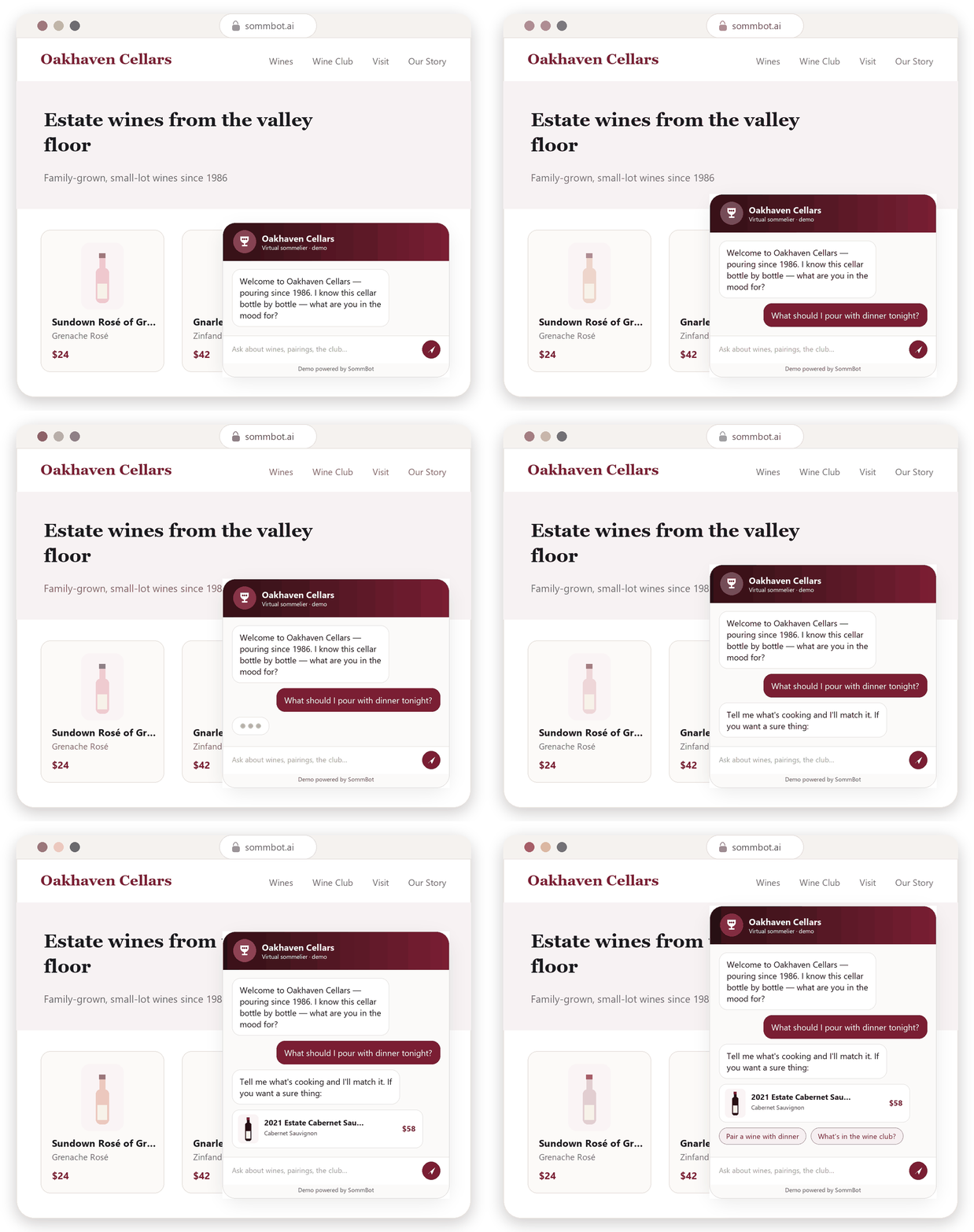
For beverage brands especially, the questions are specific — pairings, vintages, club differences, whether you ship to a given state — and a generic bot that guesses will do more harm than good. A purpose-built assistant like SommBot answers only from your approved catalog and content, speaks in your brand's voice, refuses to invent health or compliance claims, and hands off to a human when a question needs one. That restraint is the feature, not a limitation.
3. CRM and customer data — the connective tissue
The CRM is the layer teams skip and later regret. It doesn't have to be a heavy enterprise system; for many DTC brands the "CRM" is simply whatever unifies order history, email engagement, and club status into one record per customer. The goal is a single source of truth, so your email tool and your chat layer are working from the same facts. Clean data here is what makes real segmentation that moves revenue possible instead of aspirational.
4. Analytics — the layer that keeps you honest
You do not need a data warehouse to run a small DTC brand. You need to reliably answer a few questions: where buyers come from, where they drop off, and what a customer is worth over time. Pick metrics tied to money and ignore the vanity ones. Our field guide to measuring what matters for DTC conversion covers which numbers earn a place on the dashboard and which just make you feel busy.
The Automations Worth Building First
Once the four layers exist, resist the urge to automate everything. A few flows deliver most of the value, and they compound because they run on every order, forever:
- Welcome series — introduce the brand, set expectations, and make an easy first offer.
- Abandoned cart and browse recovery — the closest thing to found money in DTC. See our playbook on cart recovery for beverage and CPG brands for the wrinkles specific to shipped alcohol.
- Post-purchase and replenishment — thank, educate (how to serve it, how to store it), then nudge a reorder at the right interval.
- Club and subscription onboarding — the first weeks decide whether a new member stays.
- Win-back — a light, well-timed message to lapsed buyers before you lose them to silence.
Build them one at a time. Ship one, confirm it works and reads like your brand, then move to the next. Five reliable automations beat twenty half-configured ones.
Keep the Stack Honest
Two disciplines separate a stack that grows with you from one that becomes technical debt.
Guard the data. Every tool should read from and write to the same customer record. Duplicate contacts and stale inventory are how otherwise-polished brands embarrass themselves — the classic example being a chatbot or an email that recommends a wine which sold out last week. Keeping your catalog and your assistant in sync is an ongoing job, not a one-time setup.
Respect the rules. Beverage DTC carries real compliance weight around shipping, age, and product claims. Automations should be built to stay inside those lines by default — declining to make claims they can't support and routing edge cases to a person rather than improvising an answer.
Roll It Out Without Breaking Things
A stack is a system, and systems fail at the seams. Sequence the rollout so every new piece proves itself before the next one arrives:
- Get email and analytics solid first — capture and measurement.
- Add the conversational layer so no after-hours question goes unanswered.
- Unify the data into one customer record.
- Layer in the automations, one flow at a time, watching the numbers after each.
This order means you're never guessing. Each addition has a clear job, and you can tell within a couple of weeks whether it's earning its place. If it isn't, you cut it before it becomes another login nobody remembers.
The Stack Is a Means, Not the Goal
The best DTC stacks are quiet. Customers never notice the automation; they just feel like the brand is attentive, answers fast, and remembers them. That feeling — not the number of tools — is what drives repeat revenue.
If the conversational layer is the piece you're missing, that's exactly where SommBot fits: an on-brand assistant that answers your catalog's real questions around the clock and backs up your team instead of replacing it. See it working on your own wines in a quick SommBot demo, or reach out and we'll help you find where it plugs into the stack you already have.