Run a small CPG or winery ecommerce brand and you already know where the hours go. It usually isn't the marketing or the product photography. It's the steady drip of operational work: the same shipping question answered for the fortieth time, an order-status lookup, the "is this vegan?" email that lands at 11 p.m., the club member who wants to skip next month's shipment.
The conversation around AI ecommerce operations has gotten loud enough to be a little suspicious. So let's be precise. AI does not run your warehouse, negotiate with carriers, or replace judgment about your brand. What it does well is absorb the repetitive, language-heavy tasks that sit between a curious customer and a completed purchase—and it does them at 2 a.m. without a queue.
This is a practical map of where that genuinely pays off for DTC beverage and CPG teams, and where it doesn't.
Where AI ecommerce operations actually save time
It helps to sort operational work into two buckets. The first is physical and financial: picking, packing, refunds, inventory counts, carrier handoffs. AI touches the edges of this but shouldn't be trusted to execute it. The second is informational: answering questions, looking things up, routing requests, and summarizing what happened. That second bucket is where AI ecommerce operations quietly earns its keep, because most of it is language work that follows predictable patterns.
A useful test before you automate anything: Is this task mostly about retrieving or explaining known information? If yes, it's a strong candidate. If it changes money, inventory, or permissions, keep a human in the loop. The goal isn't to remove people—it's to stop spending your best people on your most repetitive questions.
Support triage: the first place AI earns its keep
Most inbound support for a beverage or CPG brand is not complicated. It's a small set of questions asked over and over: Do you ship to my state? When will it arrive? What's the ABV or allergen info? Can I change my club shipment? A well-scoped assistant can resolve the routine tier instantly and hand the genuinely tricky cases to a person with context already attached.
Done right, this is how you cut customer-service costs without cutting service quality—the volume that reaches your inbox drops, and what remains is the higher-value work worth a human reply. The mechanics of moving from static help content to something conversational are worth their own read; see turning your FAQ page into a conversation.
A sane triage split
- Auto-resolve: shipping windows, order tracking, return policy, product facts already published on your site.
- Answer, then offer a human: "will this survive summer heat in transit?"—give the known guidance, then route.
- Escalate immediately: damaged shipments, billing disputes, anything touching a customer's money or account.
Catalog and order questions without the back-and-forth
The most operationally expensive moment in DTC isn't after the sale—it's the hesitation right before it. A shopper is holding a bottle in the cart and has one unanswered question: Is it dry or off-dry? What does it pair with? Is the older vintage still available? When there's nobody to ask, that tab closes.
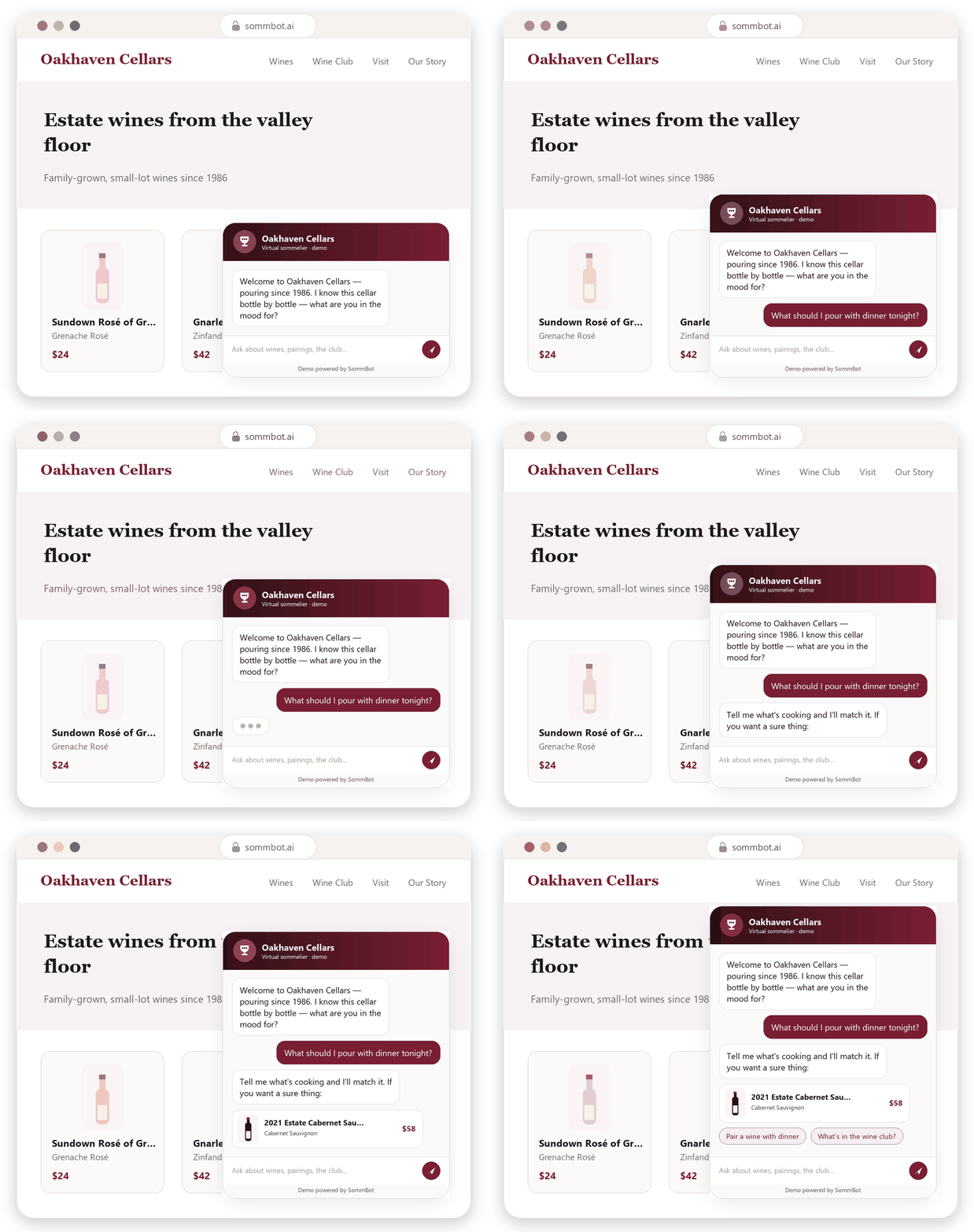
An assistant grounded in your real catalog—actual vintages, prices, inventory, and approved tasting notes—can answer those questions in the shopper's words. This is the core of what an AI sommelier does: it turns your product data into a conversation instead of a wall of filters. Tools like SommBot install on your existing store and answer only from approved content, which matters because a made-up pairing or an out-of-stock recommendation costs you trust, not just a sale.
The operational catch is data hygiene. An assistant is only as good as the catalog behind it, so keeping your product catalog and chatbot in sync isn't a nice-to-have—it's the difference between confident answers and confident-sounding mistakes. If your product descriptions are thin, fix those first; clean copy feeds both shoppers and the AI reading it.
Turning conversations into operational insight
Here's the benefit teams underestimate. Every question a customer asks is a small piece of research they're handing you for free. When those questions run through one assistant, you get a searchable record of what people are actually confused about, hesitant about, or hoping to find.
That log is an operations goldmine. If dozens of people ask whether you ship to Texas, your shipping page has a gap. If shoppers keep asking for a lighter red you don't stock, that's a merchandising signal. If everyone's confused about how the wine club billing works, your onboarding needs work. This is the same discipline as good DTC analytics—measuring what actually matters, except the raw material is your customers' own language rather than a dashboard of abstract events.
Practically, review the transcripts monthly. Look for the three or four questions that appear most often and ask a simple question of each: should the site answer this before anyone has to ask?
What AI should not touch (and why guardrails are the point)
The fastest way to turn an efficiency tool into a liability is to let it guess. For beverage and CPG brands especially, some answers carry real consequences—shipping eligibility by state, age verification, and anything resembling a health claim. An assistant that improvises here isn't saving time; it's manufacturing risk.
The right posture is narrow and honest: answer from approved information, decline gracefully when it doesn't know, and never invent compliance or health claims. That restraint is a feature. A good system treats compliance-safe answers on shipping, age-gating, and claims as a hard boundary rather than an afterthought. "I'm not certain—let me connect you with the team" is a perfectly good operational outcome. A confidently wrong answer is not.
Keep humans firmly in charge of the actions that move money, inventory, or permissions: refunds, address changes on shipped orders, discount overrides, account access. Let AI prepare and route those, not execute them.
A realistic first 30 days
- Week 1: Pull your ten most common support questions and write clear, approved answers. This is your knowledge base whether or not you deploy AI.
- Week 2: Point an assistant at that content plus your live catalog. Scope it tightly—retrieve and explain, don't act.
- Week 3: Set escalation rules so anything about money, damage, or accounts reaches a person with the conversation attached.
- Week 4: Read the transcripts. Fix the site gaps they reveal, and expand the assistant's approved answers from there.
The takeaway
Streamlining ecommerce operations with AI isn't about a robot running your business. It's about reclaiming the hours your team loses to repetitive, informational work—support triage, catalog and order questions, and the insight buried in every conversation—so people can spend their time where judgment and hospitality actually matter.
If you want to see what that looks like on your own catalog and in your own brand voice, book a SommBot demo and watch it answer the questions your customers ask most.