A wine club is the closest thing a winery has to a dependable paycheck. Instead of chasing every sale from zero, you begin each quarter knowing a base of members has already committed to buy. That predictability is why wine club growth sits at the center of almost every serious DTC strategy — and why losing members quietly, one skipped shipment at a time, stings far more than a slow retail week.
But the playbook that built those rosters — sign-ups at the bar, a generous pour, a clipboard passed across the counter — doesn't translate cleanly to a website. Online there's no host reading the room, no glass in hand, no warm moment to close on. There's a product page, a pricing table, and a visitor with questions nobody is around to answer.
Growing recurring revenue in the DTC era means rebuilding that hospitality in a place where staff can't physically stand. This piece walks through where wineries actually win and lose club members online, and where always-on answers quietly move the numbers.
Why Recurring Revenue Changes the Math
A club member is not simply a bigger customer — it's a different kind of relationship, and it changes the economics of your whole business. Acquiring a buyer costs real money in ads, content, and staff time. A single order rarely pays that back. A membership does, because the cost of winning that person is spread across many shipments instead of one.
Recurring revenue also makes the rest of the operation calmer. When you can reasonably forecast how many members will receive a shipment next quarter, you can plan inventory, cash flow, and allocations with far less guesswork. Members tend to buy beyond their club allotment, bring friends into the tasting room, and forgive the occasional stumble because they feel like insiders rather than transactions. That combination — predictability plus goodwill — is why a healthy club is usually a winery's single most valuable asset, and why protecting it deserves as much attention as chasing new traffic.
Wine Club Growth Starts Long Before the Sign-Up Button
Most teams treat the join page as the finish line. In reality it's the last step of a long consideration process, and the visitor arrives carrying a stack of specific, high-stakes questions. A club is a standing commitment to be charged again, so people are cautious — and rightly so.
The trouble is that these questions surface at odd hours, on mobile screens, long after the tasting room has gone dark. When there's no easy way to get an answer, the safe default is simply not to join. Before anyone clicks "become a member," they usually want to know:
- Commitment: How many bottles per shipment, and how often? Can I pause, skip, or cancel?
- Choice: Can I get reds only, or swap a bottle I won't drink?
- Shipping reality: Can you even ship to my state, and what will it cost?
- Risk: What happens if I don't like a bottle, or I'm not home for delivery?
- Value: What do members actually get beyond the wine — access, events, pricing?
Every unanswered question is a small reason to close the tab. The wineries that grow their clubs are the ones that make these answers effortless to find, in the moment, in their own voice. This is the same dynamic behind turning one-time buyers into members: momentum is fragile, and hesitation left unanswered hardens into a "no."
Removing Friction at the Moment of Decision
Commitment anxiety is the biggest thing standing between an interested visitor and a new membership. The fix is not a bigger discount — it's legibility. Make the terms of the club impossible to misread: how flexible it is, what shipping actually involves, and what compliance requires. Flexibility especially deserves top billing. Members who know they can skip a shipment or pause for a season sign up more readily and stay longer, because the commitment feels reversible rather than a trap.
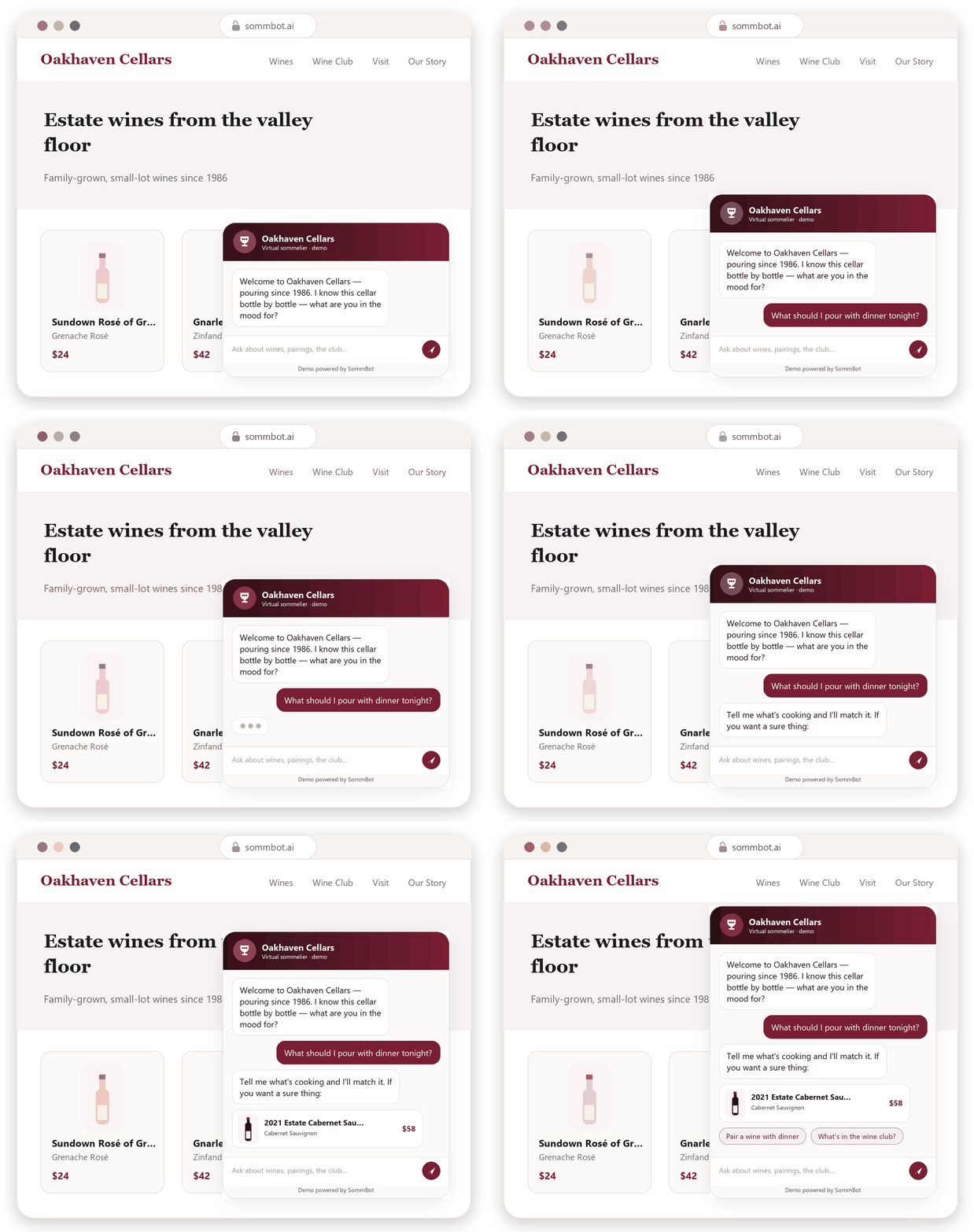
This is where an always-on assistant that knows your real club tiers, prices, and shipping rules earns its place. SommBot installs on the website you already run and answers club questions around the clock from approved content only — so it explains your actual skip policy or state restrictions rather than guessing, and hands off to a human the moment a conversation needs one. Answering "can you ship to Texas?" honestly and instantly, at 11pm, is often the difference between a sign-up and a bounce.
Retention Is Where Clubs Actually Grow
Net club growth is new members minus churn, and churn is the quieter, more expensive number. You can pour budget into acquisition and still watch the roster stay flat if members leak out the back. Worse, most cancellations aren't dramatic — they're the result of small, fixable frictions that nobody addressed in time.
Why members quietly leave
- They forgot why they joined — the relationship never formed past the first shipment.
- A charge or renewal surprised them, and it felt easier to cancel than to ask.
- A billing or address change was annoying to sort out, so they gave up.
- A shipment arrived at a bad time and there was no simple way to reschedule.
Almost every item on that list is a support problem wearing a churn costume. Strong onboarding heads off the first one — a warm, useful welcome that reminds people what they bought into. It's worth studying how other subscription brands approach reducing churn with better onboarding and support, because the mechanics transfer directly to wine. And the loyalty that keeps members for years tends to be hospitality-driven, not points-driven; loyalty beyond points makes the case that feeling known beats being discounted.
The Role of Always-On Answers
Club members are busy adults who deal with their membership whenever life allows — often late at night, on a phone, between other obligations. A member wondering whether to skip the next shipment, swap a bottle, or update a card is, in that instant, quietly deciding whether the club is worth the effort. If the answer is fast and friendly, they stay. If it requires waiting until business hours to email someone, cancellation starts to look like the simpler option.
An assistant that's available every hour changes that calculus. Because SommBot speaks in your brand's voice and works from your approved policies, it can resolve the routine skip-pause-swap-address questions on the spot and route the sensitive ones to a person. It backs your team up rather than replacing it — freeing staff from repetitive questions so they can spend their time on the relationships that genuinely need a human. That's the same logic behind capturing wine sales after the tasting room is closed: presence, not just promotion, is what compounds.
Bringing It Together
Recurring revenue isn't won in a single campaign. It's earned across dozens of small moments — a shipping question answered before doubt sets in, a skip handled without friction, a welcome that makes a new member feel like they made a good choice. Do those consistently and wine club growth stops being a scramble and starts to compound.
If you'd like to see how an always-on assistant handles real club questions in your brand's voice, book a SommBot demo and watch it field the sign-up and retention questions your site gets every night.